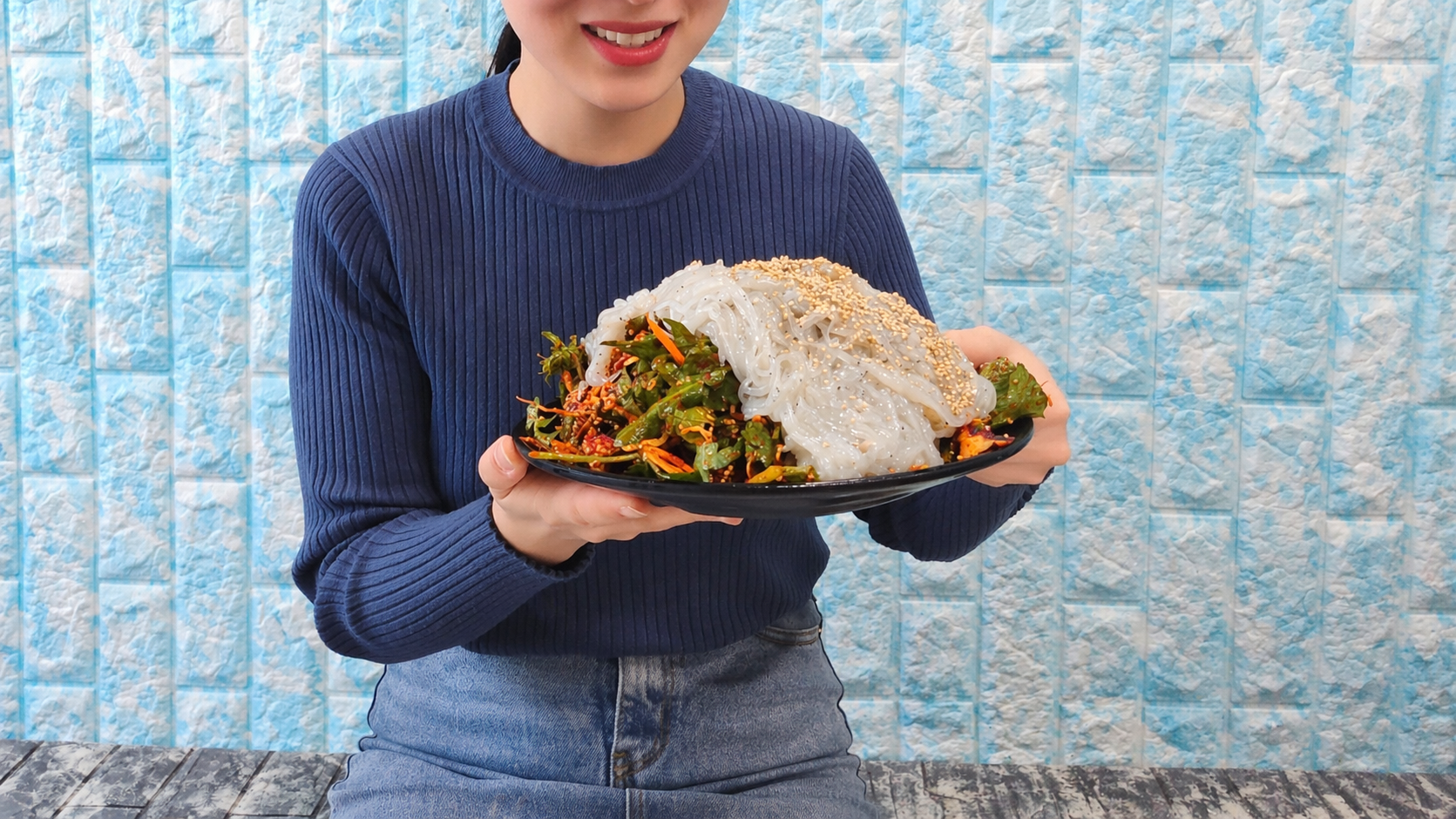
Tomorrow marks January 1st, the beginning of a new year—the New Year’s Day of the solar calendar. In Korea, there has long been a tradition of gathering as a family on the morning of Seollal, the Lunar New Year, to welcome the year by sharing a bowl of tteokguk.
Although the Lunar New Year is considered the primary holiday, many households also prepare tteokguk on the solar New Year’s Day, wishing for health and happiness in the year ahead.
More than just a dish, tteokguk has become an important cultural symbol for Koreans—signifying both the closing of the past year and the start of new resolutions.
Today, in celebration of the New Year, we take a closer look at tteokguk, Korea’s representative festive dish, where chewy rice cakes meet a warm, comforting broth to welcome a fresh beginning.
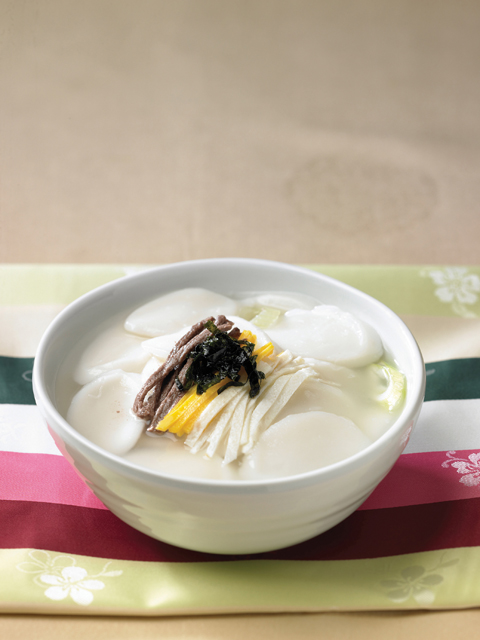
Tteokguk is one of Korea’s most representative dishes, made by simmering thinly sliced white rice cakes in a clear broth.
The primary ingredient, *garaetteok*, is long and slender, symbolizing wishes for longevity and a life free from illness—much like the belief that eating long noodles brings a long life. When sliced into rounds, the rice cakes resemble ancient Korean coins, carrying the symbolic meaning of wealth and prosperity for the year ahead.
Today, garaetteok is often sliced diagonally into oval shapes, but in the past it was cut straight across to mimic the round form of traditional coins more closely. The soup is typically prepared with a deep, savory broth made from beef brisket or beef bones, then garnished with egg strips, seaweed, and minced meat. These toppings reflect Korea’s traditional five colors, creating a balance of flavor, nutrition, and visual harmony.
A single bowl of tteokguk represents far more than a satisfying meal. It embodies the wisdom and heartfelt wishes of past generations—for the health, abundance, and well-being of the family throughout the coming year.
Depending on the region, oysters or dumplings may be added, and each household brings its own touch to the dish, enriching the taste of the New Year with personal tradition.
In Korea, there is a saying that you officially become one year older only after eating tteokguk. This reflects the idea that tteokguk is not just a meal, but a rite of passage that marks the formal beginning of a new year and a new age. Sharing a bowl of tteokguk is a moment to reflect on the year that has passed and to set intentions for the year ahead.
The clear, clean broth of tteokguk also carries symbolic meaning, representing the cleansing of impurities and the resolve to start the New Year with a fresh and orderly mindset. In this way, tteokguk goes beyond food—it stands as a cultural symbol deeply woven into the rhythm of Korean life.
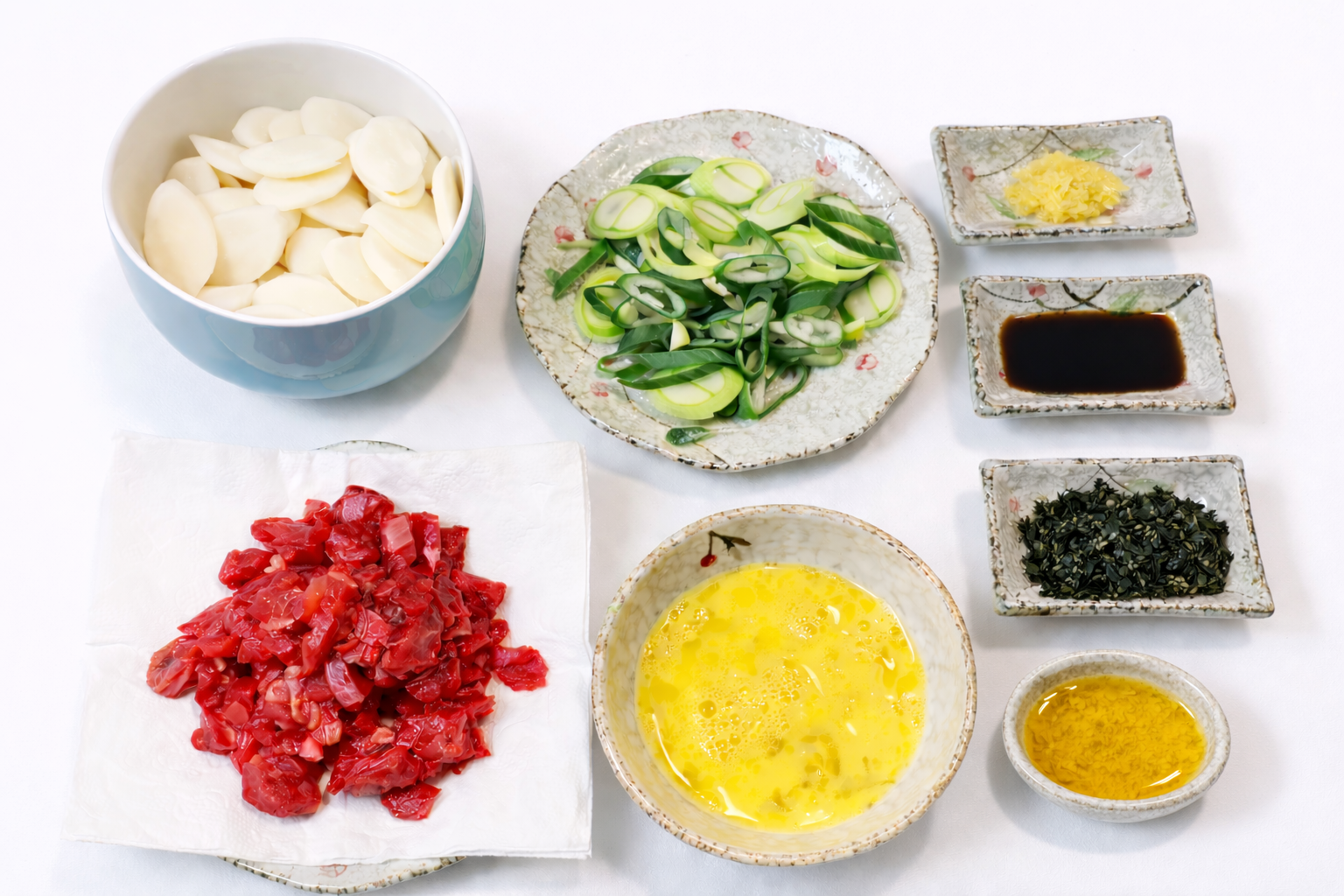
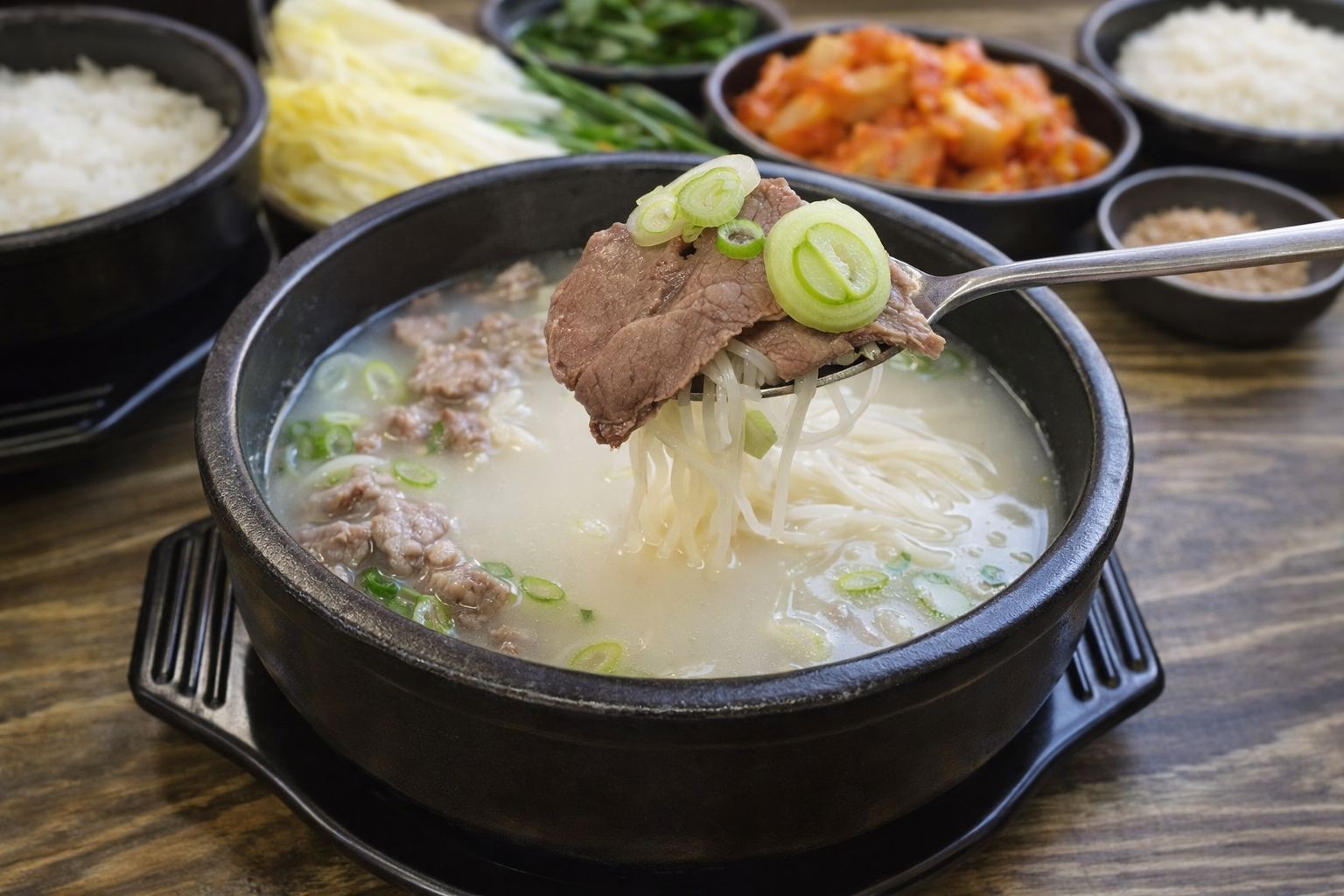
Tteokguk is most commonly prepared with either beef bone broth or beef stock. Cooks may use beef bones (such as leg bones or mixed bones), beef cuts like brisket or shank, or a combination of both. When only meat is simmered, the broth remains clear, while bone-based broths develop a milky, opaque color as the collagen is released.
Depending on the region, some versions of tteokguk use anchovy or dried pollack broth. However, it is widely believed that broths made with anchovies or kelp were introduced during the Japanese colonial period. The Korean proverb “Better chicken than pheasant” is said to have originated from tteokguk as well—originally made with pheasant broth, it was later adapted to chicken when pheasant became scarce and expensive.
In coastal areas, oysters or seaweed such as maesaengi are sometimes added, while some people enhance the broth with cubed radish kimchi or napa cabbage kimchi according to personal taste.
On a personal note, no matter the recipe, tteokguk—and kimchi—always seems to taste best when made by one’s mother.
On your way home from work today, why not stop by the market, pick up ingredients for tteokguk, and spend some meaningful time cooking and sharing a bowl with your family tomorrow?
To everyone reading this, thank you for all your hard work this past year. May the coming year be filled with good things and warm moments.
Happy New Year!