It feels like just yesterday that we welcomed 2026 with excitement, yet before we know it, the Lunar New Year has passed and we are already nearing the end of February.
Now that the long holiday is over and we’ve returned to our daily routines, we found ourselves thinking about what story to share next — and this time, we decided to explore the world of Myanmar cuisine.
What do you usually eat for your most everyday meal?
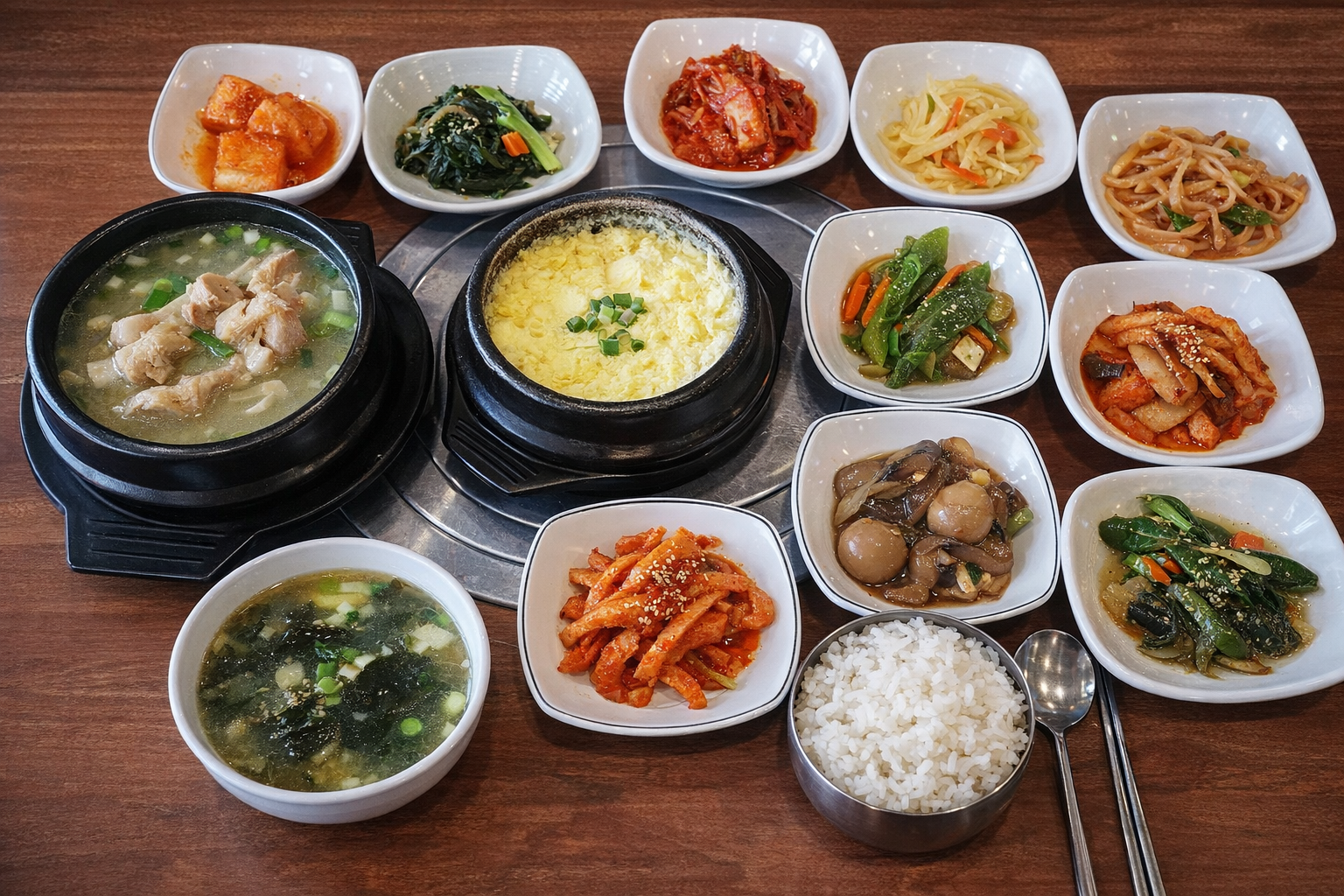
For many Koreans, the answer would likely be baekban — a simple set meal of rice, soup, and a variety of side dishes that change from day to day. It’s not considered a special dish, but rather a fundamental part of daily life — a familiar, comforting meal that many people rely on every day.
But did you know that Myanmar has a similar kind of everyday meal?
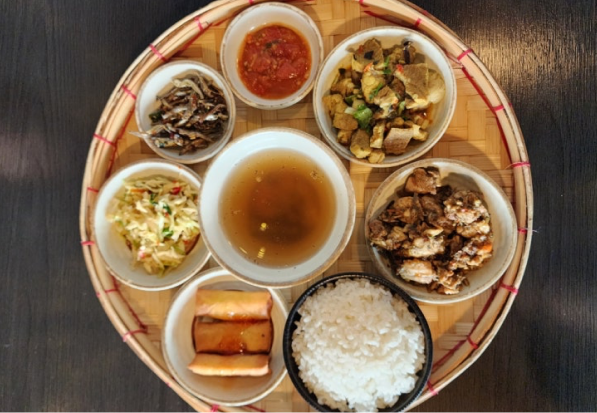
It’s called zakatamin, the dish we’re introducing today. Served on a bamboo tray with rice and an assortment of side dishes, zakatamin (စကောထမင်း) is one of the most common meals in everyday Myanmar life.
Rather than being defined by a single main dish, it is a style of eating — where rice is shared alongside whatever curries, soups, vegetables, and sauces are prepared that day. In that sense, it closely resembles the structure of a Korean baekban meal.
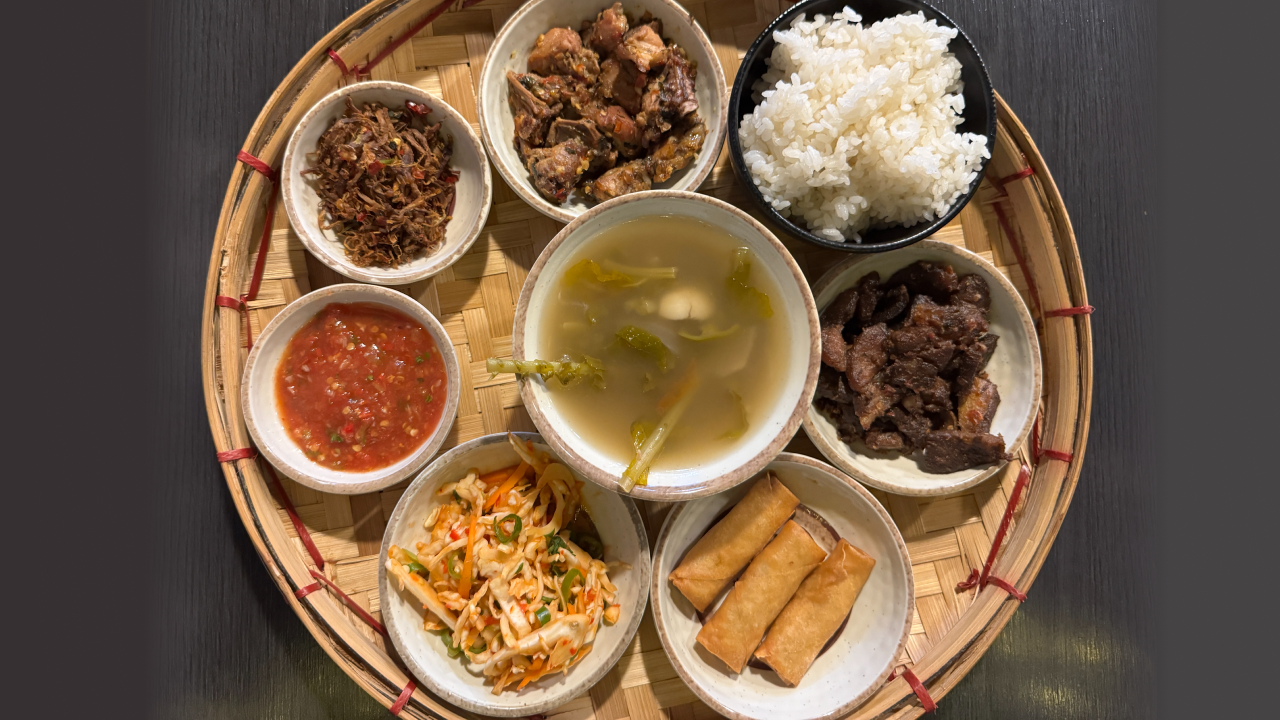
When you are first served a zakatamin meal, the first thing you notice is a plate of white rice placed on a bamboo tray, surrounded by a variety of small dishes. Rather than being a fixed menu, however, zakatamin is better understood as a style of eating — a meal shaped by whatever dishes are prepared that day.
Because of this, while the overall structure remains similar, the exact composition can vary depending on the region, the household, and the available ingredients.
At the center is always rice, accompanied by one or two curries or soup-based dishes. Curries made with pork, chicken, or fish — often cooked in oil — are a staple of the Myanmar table. Unlike heavily spiced curries found elsewhere, these tend to have a milder, more subtle flavor, with an emphasis on garlic and oil rather than strong spices. Alongside them, a light soup made from lentils or vegetables is typically served, helping to balance the richer dishes.
Vegetables also play an important role in zakatamin. Blanched leafy greens, fresh cucumber, or cabbage are commonly served on the side, sometimes as a simple salad. To complete the meal, fermented sauces or fish-based condiments are often added. One of the most distinctive is ngapi, a fermented fish paste that, despite its strong aroma, adds a deep savory flavor when eaten with rice.
In this way, zakatamin is not centered around a single main dish, but is instead a balanced meal made up of many components. To fully enjoy it, rather than eating each dish separately, it is natural to combine small portions of different side dishes with rice. It is a dining style that reflects how people in Myanmar share their table — and their daily lives — with one another.
Just as side dishes in Korea can vary in flavor and style depending on the region, the composition of zakatamin also changes from place to place. Myanmar is a country shaped by diverse ethnic groups and climates, and its dining table naturally reflects these regional lifestyles and environments.
In central Myanmar, especially in lowland cities such as Yangon and Mandalay, zakatamin is often centered around oil-based curries and soups. Curries made with pork or fish are typically served alongside rice, accompanied by lentil soup or vegetable-based broths. Blanched vegetables and fermented condiments complete the meal, creating a simple yet well-balanced home-style spread. Much like Korean baekban, it is a meal designed to be enjoyed daily without feeling heavy.
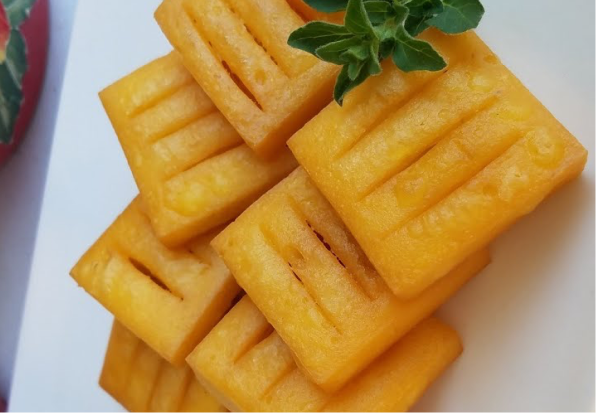
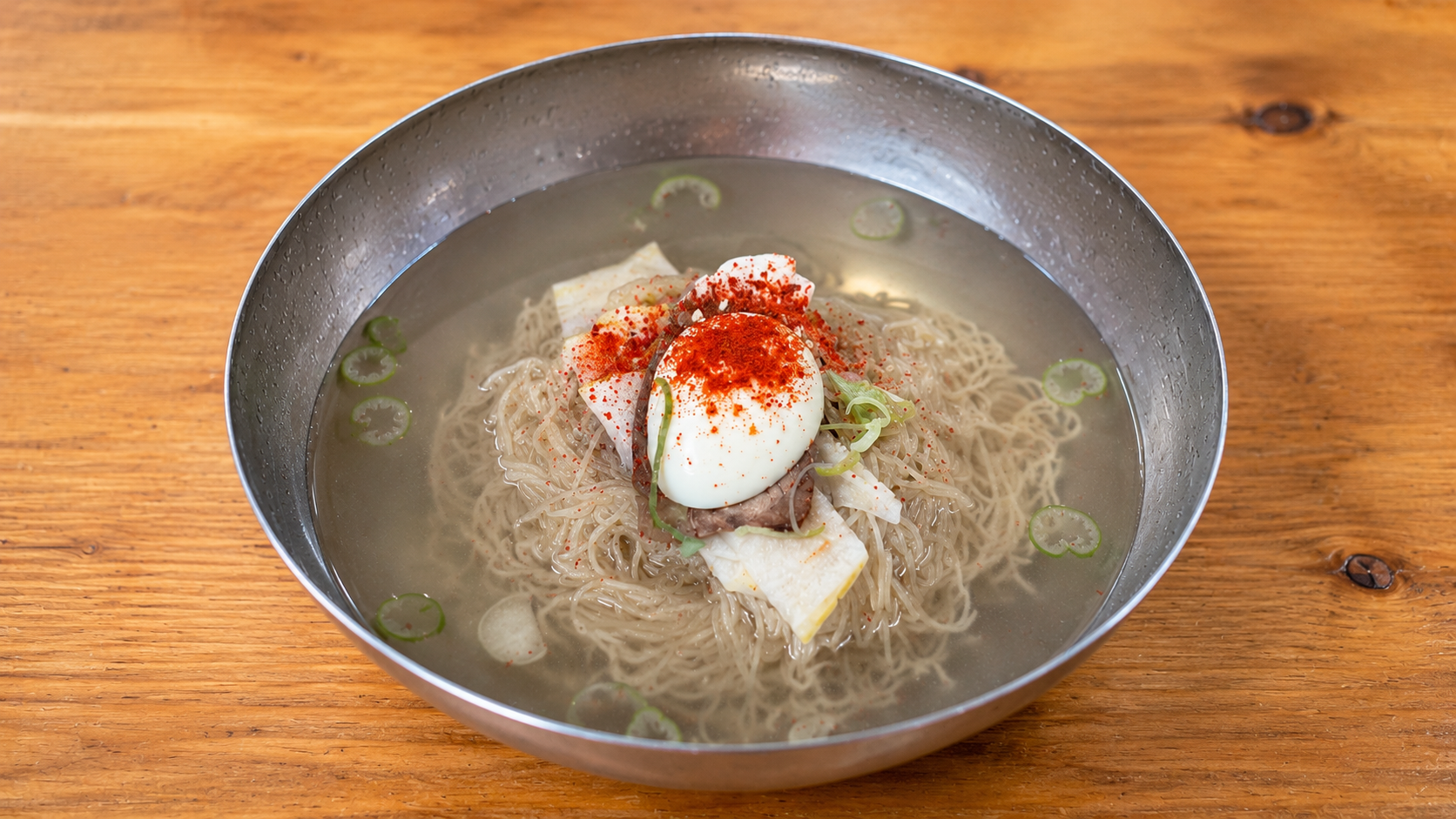
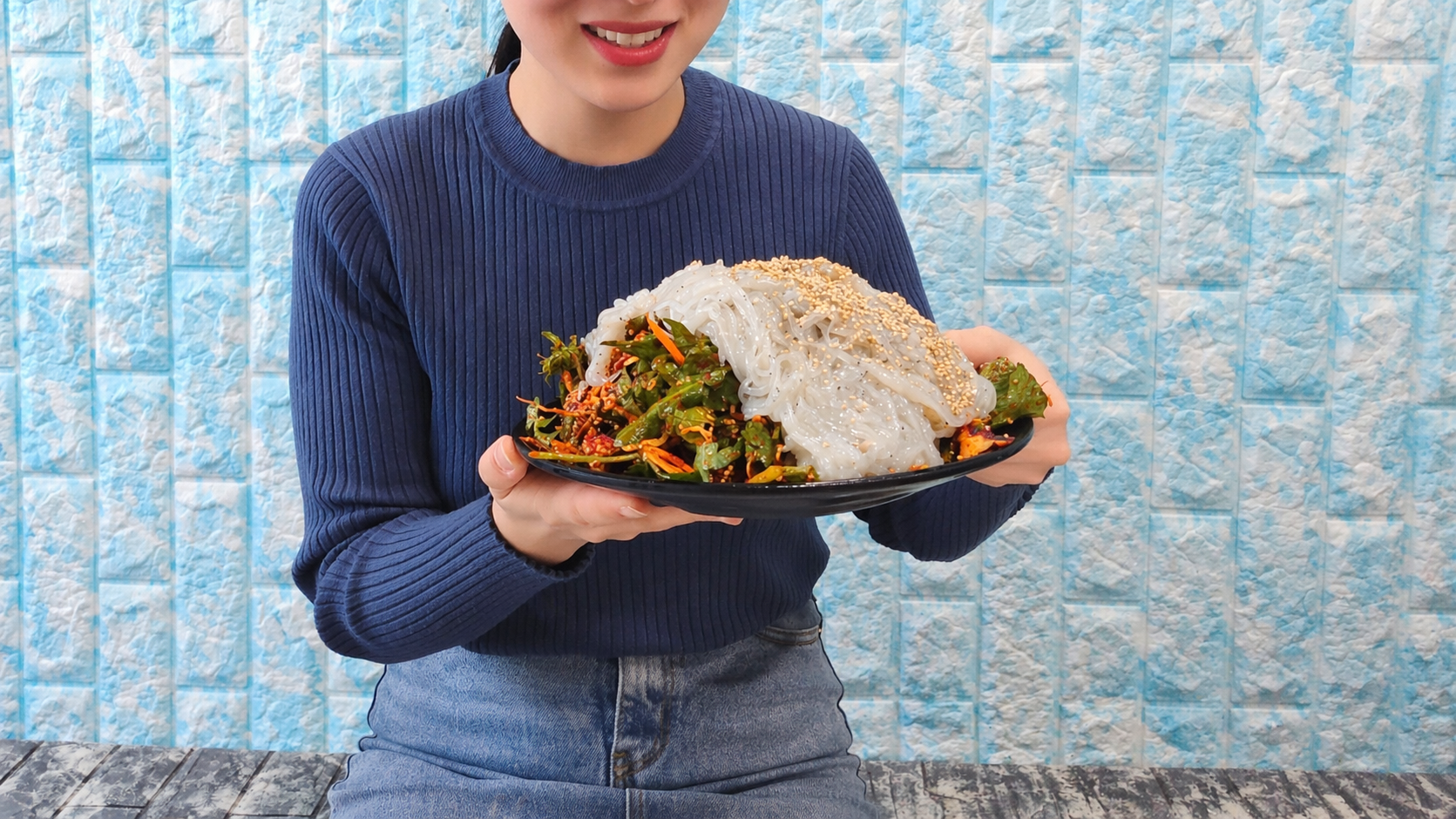
In contrast, when you travel to highland regions such as Shan State, the character of zakatamin begins to shift. Shan cuisine is generally lighter and cleaner in flavor, with less oil compared to dishes from the central plains. Ingredients such as tomatoes, herbs, peanuts, and fermented soybeans are commonly used, and noodle-based dishes are also more prominent. Signature dishes like Shan noodles (Shan khao swe) or Shan tofu salad tend to highlight the natural flavors of ingredients rather than relying on strong seasoning.
That said, the version of zakatamin that travelers encounter in Shan regions is often more elaborate. In restaurants or tourist areas, meals are typically arranged to showcase a wider variety of textures and flavors, with fried items and salads included on the same table. Chili oil or spicy sauces are sometimes added as well, making the overall taste slightly bolder than in other regions. This reflects not so much traditional home cooking, but rather a restaurant-style zakatamin designed to offer a broader tasting experience.
In this way, zakatamin is not a single fixed dish, but a flexible style of dining shaped by region and everyday life. Even when the name is the same, the atmosphere and flavors can vary depending on where you eat it — and exploring these differences is part of the joy of discovering Myanmar’s food culture.
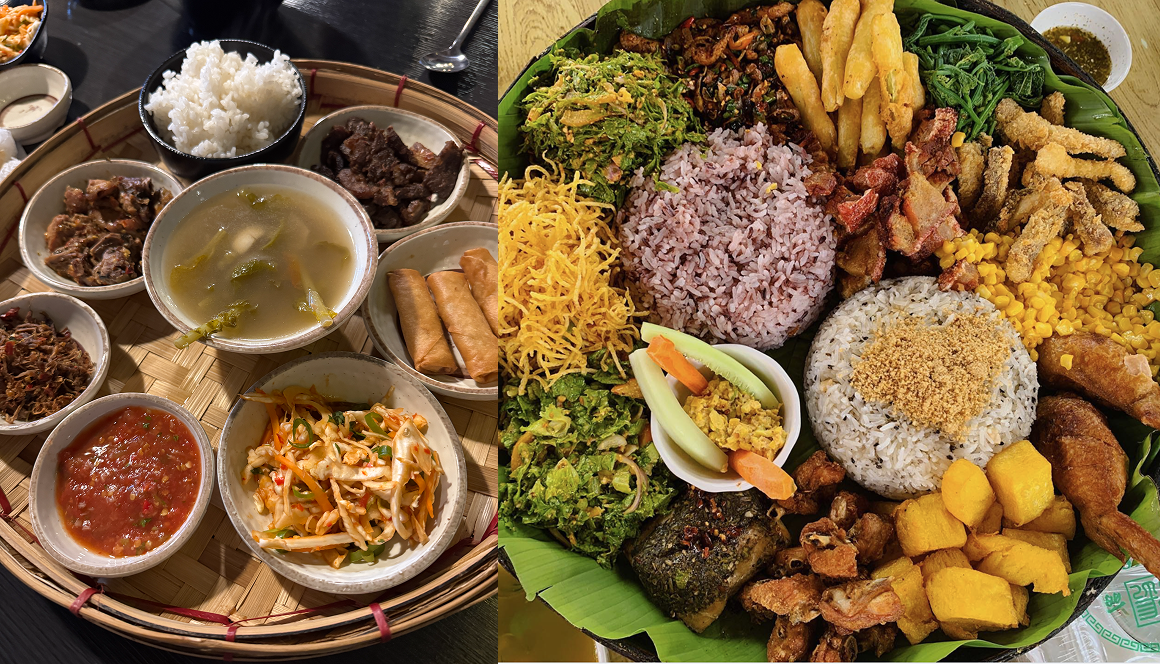
Zakatamin is sometimes served directly on a bamboo tray, while in other cases a banana leaf is placed underneath the meal. This can vary depending on the restaurant or setting, and the presence of a banana leaf is not what defines zakatamin itself.
When used, the leaf is not just decorative — it serves a practical purpose rooted in traditional dining practices. When warm rice and side dishes are placed on it, the leaf releases a subtle grassy aroma that softens the overall scent of the food. It also helps prevent oil from soaking into the tray and keeps the rice from drying out, functioning much like a natural plate.
At the same time, the banana leaf can reflect Myanmar’s shared dining culture, where multiple people gather around a single spread of food. It’s worth noting that the leaf is used as a serving surface, not as something to be eaten.
So even if your meal doesn’t come with a banana leaf, it is still very much zakatamin. And when it does, it offers a small glimpse into the practical wisdom and dining traditions of Myanmar.
In Myanmar, it is common to eat using the right hand, especially when enjoying meals like zakatamin. Instead of using a spoon or fork, people often mix rice and side dishes with their fingers and eat by hand.
This approach allows you to feel the texture of the food and engage more fully with the meal. As a way of respecting local customs, trying to eat with your clean right hand can be a meaningful and memorable experience.
Myanmar meals are also highly communal, with multiple people sharing dishes from the same table. It is natural to share side dishes and enjoy conversation while eating together.
Taking your time and eating at a relaxed pace is appreciated, and washing your hands before and after the meal is essential.
When I first tried zakatamin, I remember feeling a bit surprised by how unfamiliar the flavors were.
The dishes looked somewhat familiar — soups and side dishes that seemed similar at first glance — but once I tasted them, there was a noticeable sourness that I hadn’t expected.
As a Korean, I had assumed that zakatamin might taste similar to Korean meals based on its appearance. But the actual flavors were quite different, which made the experience feel unfamiliar at first.
Zakatamin is not a meal defined by a single flavor, but one that comes together through a combination of dishes. Rather than eating each side dish separately, it feels more natural to mix different elements with rice and discover combinations that suit your own taste.
Personally, I found that adding a crispy, savory fried dish — like pu-kyaw from Mandalay — made the overall meal feel more balanced and approachable.
With unfamiliar food, it’s often better not to judge it all at once. Taking time to explore different combinations, one bite at a time, can make the experience much more enjoyable.
And before you know it, zakatamin is no longer just an unfamiliar dish, but a meal that helps you understand the way people in Myanmar gather around the table.