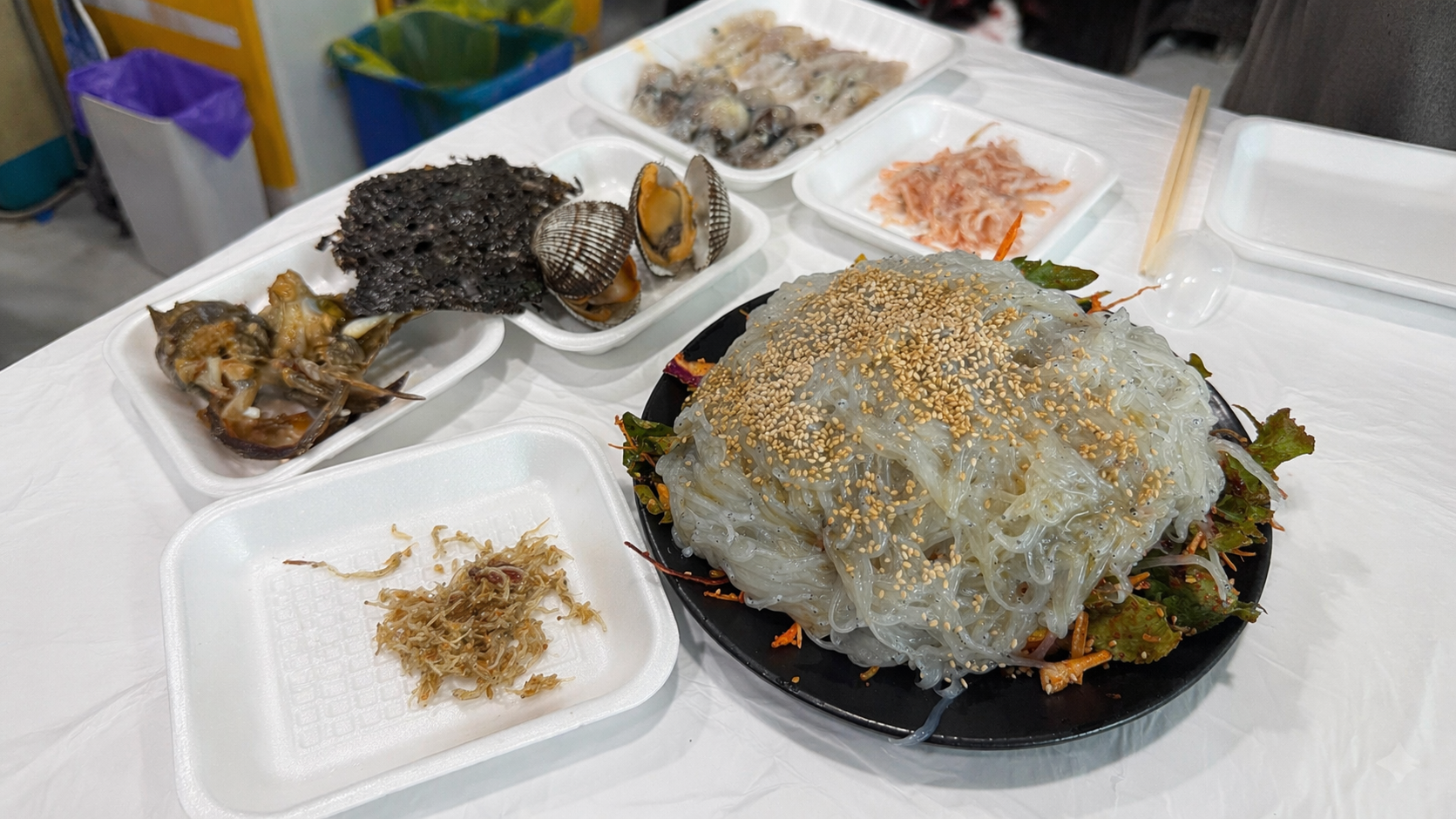
In April, when cherry blossoms begin to bloom, a unique kind of energy fills Janggo Harbor in Dangjin, located on Korea’s west coast. At seafood stalls, you’ll notice piles of something thin, translucent, and constantly wriggling. To a first-time visitor, it’s an unfamiliar and slightly puzzling sight — What is that?
That is silchi.
This tiny, thread-like fish, almost transparent in appearance, can only be eaten alive for a brief period of about a month, from late March to early May. Because it dies so quickly after being caught, most silchi are dried for distribution. Eating it raw — as silchi sashimi — is only possible near the coast, and only during its short peak season. That’s why, at this time of year, the area around Janggo Harbor becomes crowded with people eager to experience this rare spring delicacy.
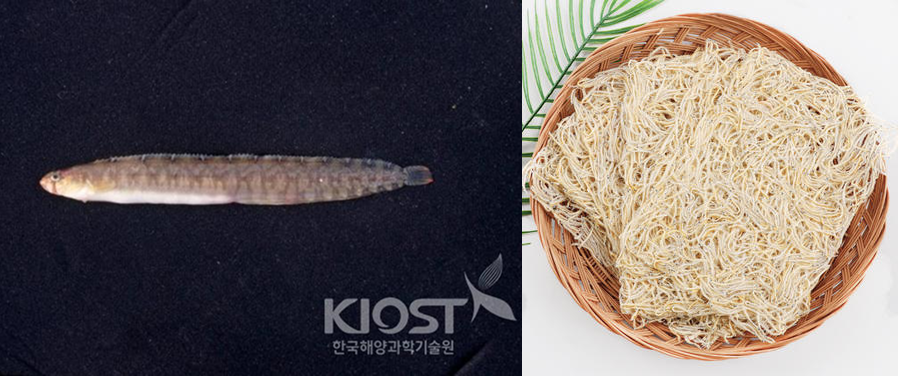
Silchi are the juvenile form of a small coastal fish that resembles a goby in appearance, but belongs to a different group of fish found across the northwestern Pacific Ocean. In Korea, they are commonly found along the west and south coasts, as well as in the East China Sea and Bohai Bay, but not in the East Sea.
Adult fish typically grow to around 8 to 10 cm in length, with some reaching over 20 cm. As they mature, their bodies become flatter and their bones harder, making them unsuitable for eating. This is why they are only consumed at a very young stage.
In Korea, there is a traditional dried fish snack called bangeo-po, made by pressing and drying tiny fish into thin sheets. Today, similar products are often made using juvenile fish like silchi, as the original fish have become harder to find.
Silchi are a one-year fish species, mainly caught along Korea’s west coast in spring. Because their bones have not yet hardened, they can be enjoyed raw at this stage. Once this short period passes, they can no longer be eaten this way.
That’s why silchi sashimi is only available for a brief window — roughly from late March to early May — making it a truly seasonal delicacy.
Silchi are most transparent when freshly caught and at peak freshness.
The name silchi comes from its appearance. As juveniles, their bodies are almost completely transparent — so delicate that, when placed on your finger, you can nearly see the veins beneath their skin. Their bones are still so soft that there’s no need to chew, which can feel quite different if you’re expecting the firm, chewy texture of typical sashimi.
But the moment you take a bite, it becomes clear why this fish draws people to Dangjin every spring. It melts softly in your mouth, with almost no fishy taste — just a subtle ocean freshness and a faint, slightly bitter note that keeps you reaching for another bite. When paired with a tangy vegetable mix, silchi sashimi becomes even more appetizing, awakening your palate and enhancing its delicate flavors.
There’s a reason food lovers call it “the taste of spring.”
Silchi isn’t just known for its flavor — it’s also valued for its nutritional benefits. Rich in calcium, phosphorus, and vitamins, it’s often considered a nourishing seasonal food. Because it’s eaten whole, including the bones, it’s also known to be a good source of calcium.
Curious about great food, the EasyMenu team visited the Dangjin Seafood Distribution Center last weekend.
Because it was the weekend, the vendors were extremely busy, and the menus listed only the names of dishes and their prices, with little to no explanation.
At each table, plates piled high with silchi sashimi were being served, and everyone was eating it in their own way.
At the table next to us, the diners were just eating the silchi and seasoned vegetables as they were, without wrapping them in seaweed.
Normally, the restaurant would provide seaweed for wrapping, but the staff were too busy to bring it. The family next to us was also occupied taking care of their child, with no chance to notice how others were eating. They continued eating what was in front of them, but there was a hint of confusion on their faces.
After noticing this, we said, “You’re supposed to wrap the silchi in seaweed before eating it!” and handed them some seaweed.
Only then did they smile and respond, “Oh, this is how you eat it!”
If they had known from the beginning that silchi is meant to be wrapped in seaweed or perilla leaves, they might have asked the vendor, “Do you have seaweed or perilla leaves?”
But when you don’t know how a dish is meant to be eaten, you don’t even know what to ask.
Even for Koreans, it can be confusing when trying it for the first time. When people hear “sashimi,” they usually think of soy sauce and wasabi. But silchi is different. It’s typically enjoyed wrapped with seasoned vegetables, perilla leaves, or seaweed — the method of eating is part of the dish itself. Yet this crucial information was not naturally communicated at the site.
So what about foreign visitors?
That day, there were no multilingual menus, no descriptions of the dish, and no guidance on how to eat it. What kind of fish silchi is, what this translucent dish tastes like, and how it should be eaten — all of this remained unspoken knowledge, known only to those who were already familiar with it.
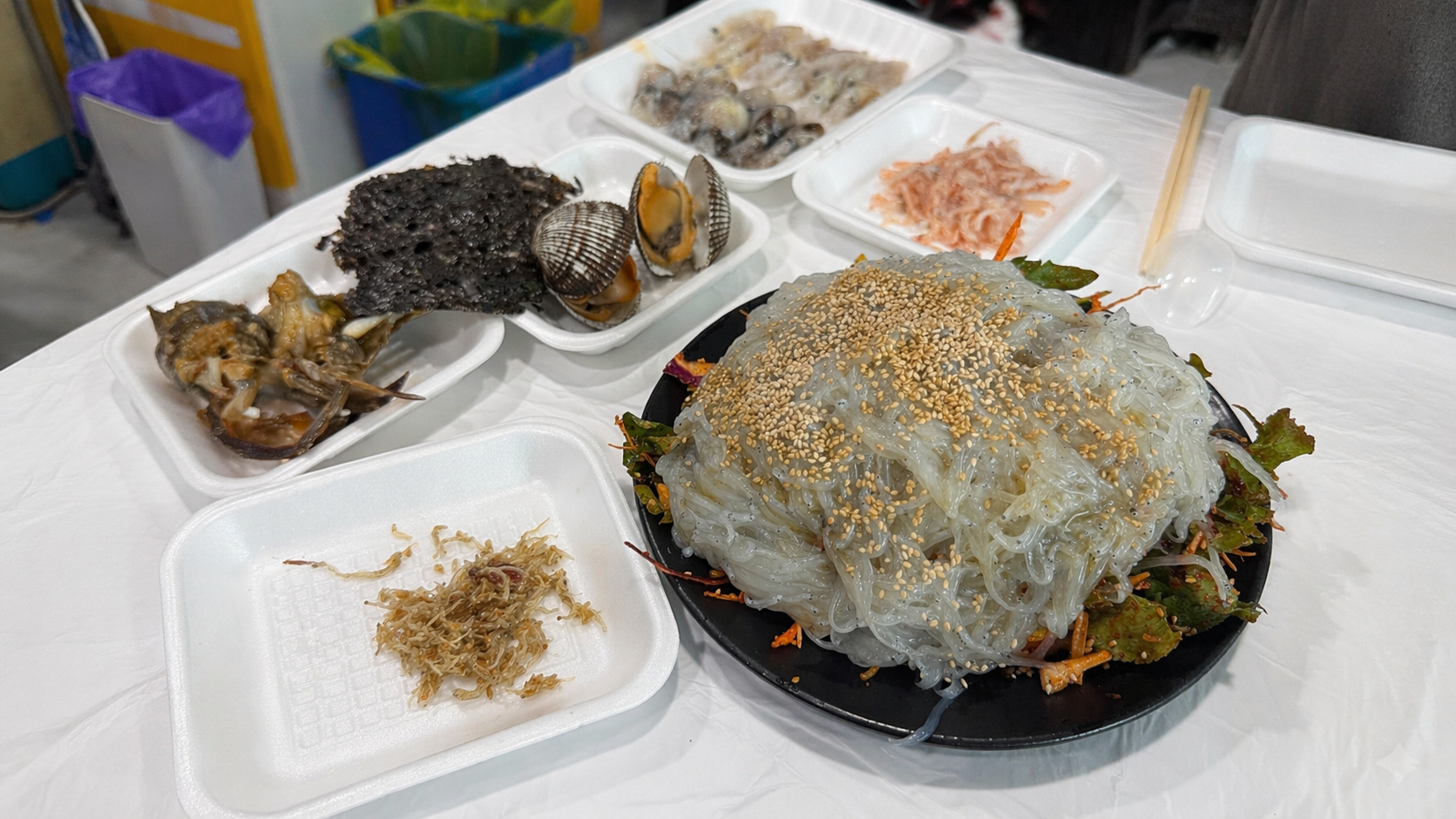

Silchi sashimi is a dish whose flavor changes significantly depending on how you eat it. If it’s your first time trying it, there are a few things to pay attention to from the moment you place your order.
Sesame oil and seeds — the secret to its nutty flavor
When silchi sashimi is served, a drizzle of sesame oil is poured over the fish, followed by a light sprinkle of sesame seeds. This simple step is key to bringing out its rich, nutty flavor. The deep aroma of sesame oil blends with the delicate ocean notes of silchi, removing any fishy taste and leaving behind a clean, savory richness. Even before your first bite, noticing this combination can change how you experience the dish.
Seaweed or perilla leaves — choose your preference
There are two common ways to enjoy silchi sashimi: wrapped in seaweed or in perilla leaves. Plain, unseasoned seaweed offers a clean, nutty flavor that pairs naturally with the fish, while perilla leaves add a fresh, herbal aroma and create a different layer of taste.
Depending on the restaurant, you may be offered only one of these options, and neither is considered more “correct” than the other. Trying both and finding your preference is part of the experience. Adding a small amount of chili-vinegar sauce can enhance the flavor with a hint of tanginess, but it’s recommended to first try a bite without any sauce to fully appreciate the delicate taste of the fish.
Silchi muchim — enjoying it with seasoning
Another popular way to eat silchi is as silchi muchim, where the fish is lightly mixed with vegetables such as cucumber, onion, and carrot, along with a tangy sauce made from chili paste, vinegar, sugar, and minced garlic. The key is to mix it gently, so the delicate texture of the fish is not damaged. The slight bitterness of silchi blends well with the seasoning, making it more approachable. It’s often served over rice and mixed like bibimbap, creating a satisfying and easy-to-enjoy meal, even for first-time diners.
Beyond sashimi — other ways to enjoy silchi
Silchi can also be enjoyed in other forms. A clear silchi soup offers a light and refreshing flavor that is easy on the stomach, while silchi jeon — a savory pancake made with a light batter and silchi — has a rich, comforting taste that can be enjoyed by everyone.
Like silchi sashimi, some dishes can only be truly enjoyed when you know how to eat them. Simply knowing the name of a dish isn’t enough. What it’s made of, what it tastes like, and how it’s meant to be eaten — only when all of this comes together does the experience feel complete.
Korean cuisine is full of dishes like this — foods that require a certain way of eating to be fully appreciated. Pairing bossam with salted shrimp, wrapping grilled pork belly in lettuce, or adding vinegar and mustard to naengmyeon before eating. These may feel natural to those who are familiar with them, but for someone encountering them for the first time, they are easy to miss if no one explains them.
This is exactly where EasyMenu begins.
Rather than simply translating menu names, EasyMenu focuses on delivering the context behind each dish. From ingredients and flavor profiles to recommended ways of eating and allergy information, it helps diners understand and enjoy unfamiliar foods with confidence.
So whether you’re a traveler exploring Korean cuisine for the first time, or someone trying silchi for the first time, you can experience the dish as it’s truly meant to be enjoyed — without confusion, and without missing what makes it special.
Every year from mid to late April, the Silchi Festival takes place at Janggo Harbor in Dangjin, located on Korea’s west coast.
During the festival, visitors can enjoy freshly caught silchi at its peak, along with a variety of events such as tasting sessions of silchi muchim (seasoned silchi salad) and local specialty markets. It’s a great opportunity to visit with family or friends, enjoy seasonal seafood, and take in the scenic coastal views of spring.
At the festival, you can also purchase fresh silchi to take home, or even bring camping gear and stay at nearby campsites by the harbor. With many restaurants serving silchi sashimi in different styles, it’s an ideal destination for a memorable food-focused trip.
When choosing a restaurant, it’s worth checking how the seasoned vegetable mix is prepared and what side dishes are included, as these can vary from place to place and influence your overall experience.
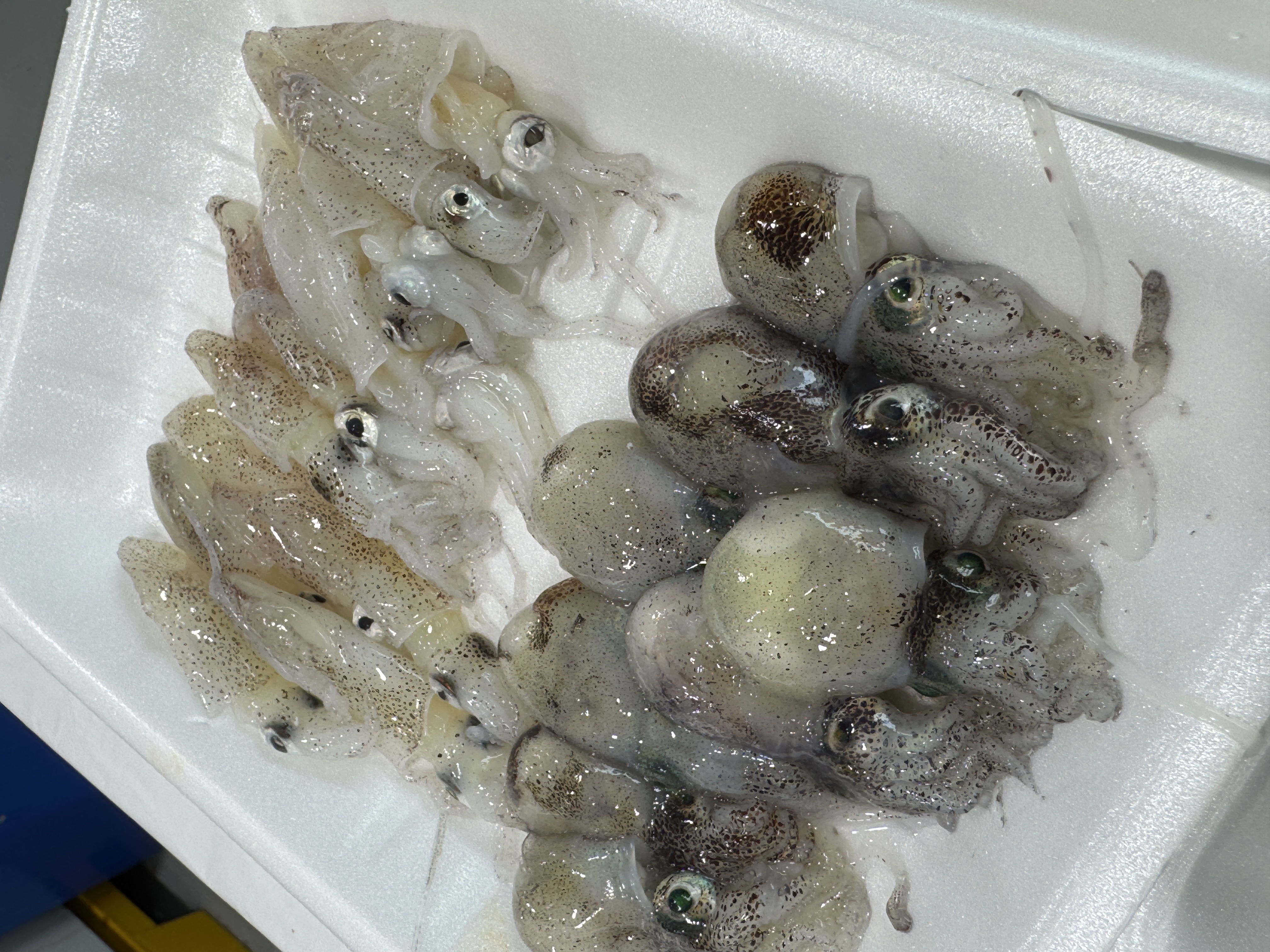
Silchi sashimi is a dish you’ll have to wait an entire year for if you miss it.
But if you’ve made your way to Janggo Harbor, it would be a shame to stop at just silchi. Here, you can also try horaegi sashimi (small squid) and gwi-kkolttugi, another type of tiny squid. Horaegi is small and plump, offering a chewy, slightly sweet texture that contrasts beautifully with the delicate, melt-in-your-mouth softness of silchi.
Starting with the subtle flavors of silchi and finishing with the firm bite of horaegi — this is a sequence of tastes you can only experience here, in Janggo Harbor during spring.
These dishes are only available for a short time each year, and their true value is revealed when you understand how to enjoy them. If you find yourself visiting for silchi this spring, why not go beyond simply eating, and take the time to understand the dish — its context, its flavors, and the way it’s meant to be enjoyed?
The same food can become a completely different experience the moment you understand it.