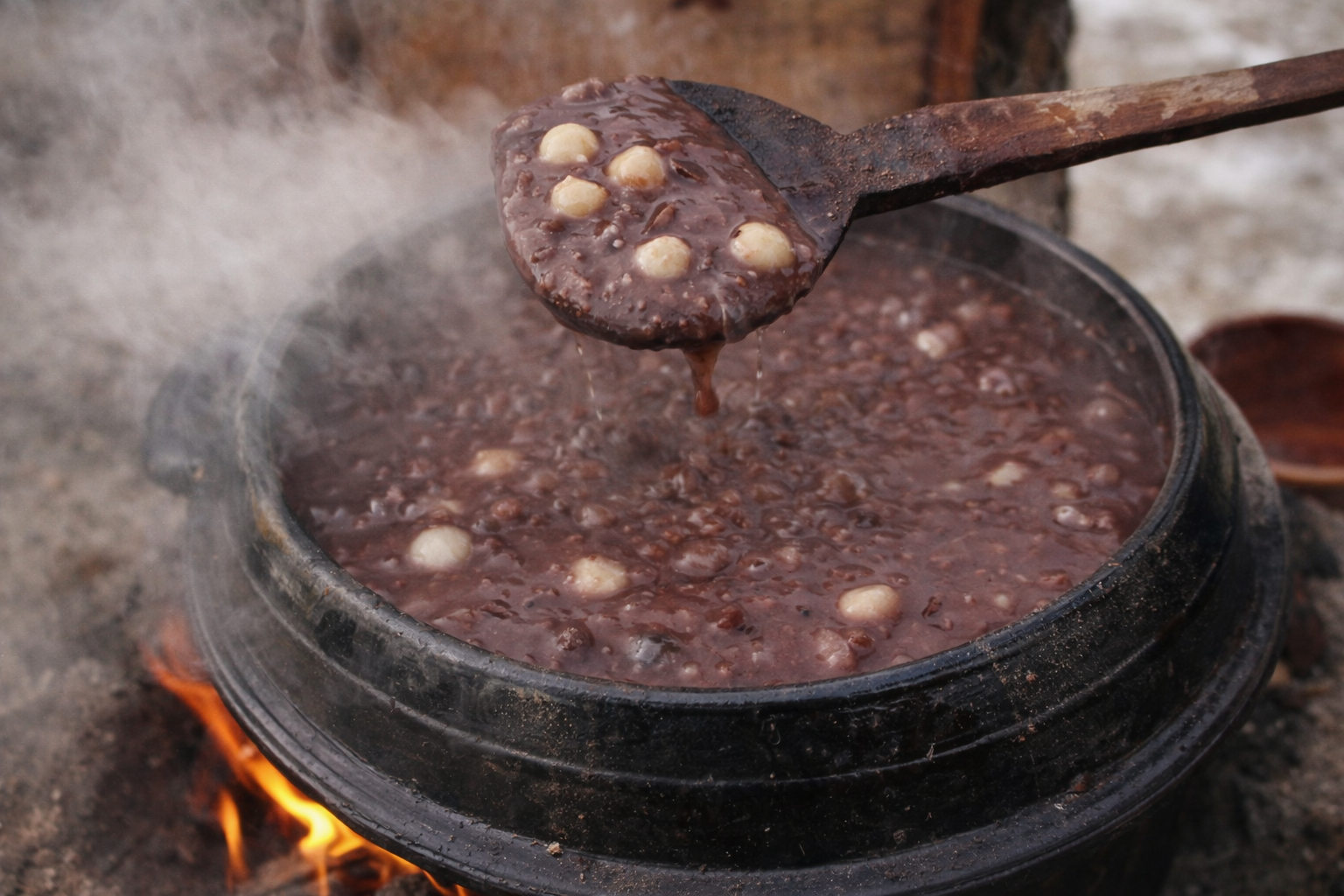
Dongji (冬至), which falls around December 22 or 23 each year, is the 22nd of the 24 solar terms and marks the day with the longest night and the shortest daylight of the year.
It is a moment when the sun’s energy reaches its weakest point, yet also a turning point signaling the gradual return of longer days and renewed vitality. Recognizing this significance, Koreans of the past referred to Dongji as Ase—“the minor New Year”—and regarded it as one of the most important seasonal observances after Seollal. As the saying goes, “You grow a year older after Dongji,” reflecting its role as a symbolic boundary between the old year and the new.
On this day, a dish tinged with deep red appears on Korean tables: patjuk, red bean porridge. More than a way to warm the body on a cold winter night, patjuk has long served as a cultural symbol imbued with ancestral wisdom and heartfelt wishes. Believed to harness the protective power of red beans, it represents hopes for warding off misfortune and welcoming health and peace in the year ahead.
In this issue, EasyMenu Magazine sets out to explore the rich, comforting world of Dongji patjuk—where time, tradition, and taste come together in a single bowl.
The custom of eating patjuk on Dongji goes far beyond a simple culinary practice, carrying deep ritualistic and cultural meaning. From ancient times, Koreans regarded the color red as a symbol of yang energy—believed to counteract yin forces such as evil spirits and misfortune.
Dongji, recognized as the day when the night is longest and yin energy is at its strongest, was thought to be a time when negative forces were most active. By consuming foods made with red beans, people sought to drive away harmful energies and pray for the well-being of their households. This belief is vividly illustrated in the ancient text Jingchu Suishiji, which recounts the story of Gonggong’s foolish son. According to the tale, he died on Dongji and became a plague-spreading spirit that feared red beans, prompting people to cook red bean porridge and scatter it around their homes to ward off illness and misfortune.
Indeed, the act of splashing patjuk on doors and walls was considered a form of protective ritual, while offering it at household shrines as part of dongji gosa (winter solstice rites) symbolized devotion to the gods and prayers for domestic peace. Beyond its symbolic role, sweet red bean porridge also served a practical purpose. Red beans are known to warm the body, support circulation, and promote diuretic effects—making patjuk a nourishing dish well suited to restoring energy during the cold winter months.
In this way, patjuk transcends its role as food. It stands as a cultural vessel, carrying the ancestors’ heartfelt wishes to cleanse lingering negativity from the past year and welcome the coming year with renewed vitality and positive energy.
Not every Dongji calls for red bean porridge. In fact, there are times when red bean rice cakes (pat-tteok) are traditionally eaten instead.
Dongji is classified by when it falls in the lunar month: when it arrives in the middle of the month, it is called Jungdongji, and when it falls in the latter part, Nodongji. Aedongji, literally meaning “young Dongji,” refers to a solstice believed to carry weaker energy.
On Aedongji, it was traditionally thought that children and the elderly could be more vulnerable to illness. Because red beans were believed to possess strong protective energy, consuming too much was considered potentially harmful on this day. As a result, adults would eat only small amounts of red bean porridge, while children often avoided it altogether. Families also refrained from sharing patjuk with neighbors, and many households chose not to prepare it at all.
In 2025, Dongji falls on Aedongji. Rather than eating red bean porridge, it is customary to enjoy red bean sirutteok instead—a way of preserving one’s energy while still honoring tradition. If you do choose to eat patjuk, it is advised to do so in moderation. Why not mark Aedongji with red bean rice cakes and embrace a gentle, healthful way to pass through the winter season?
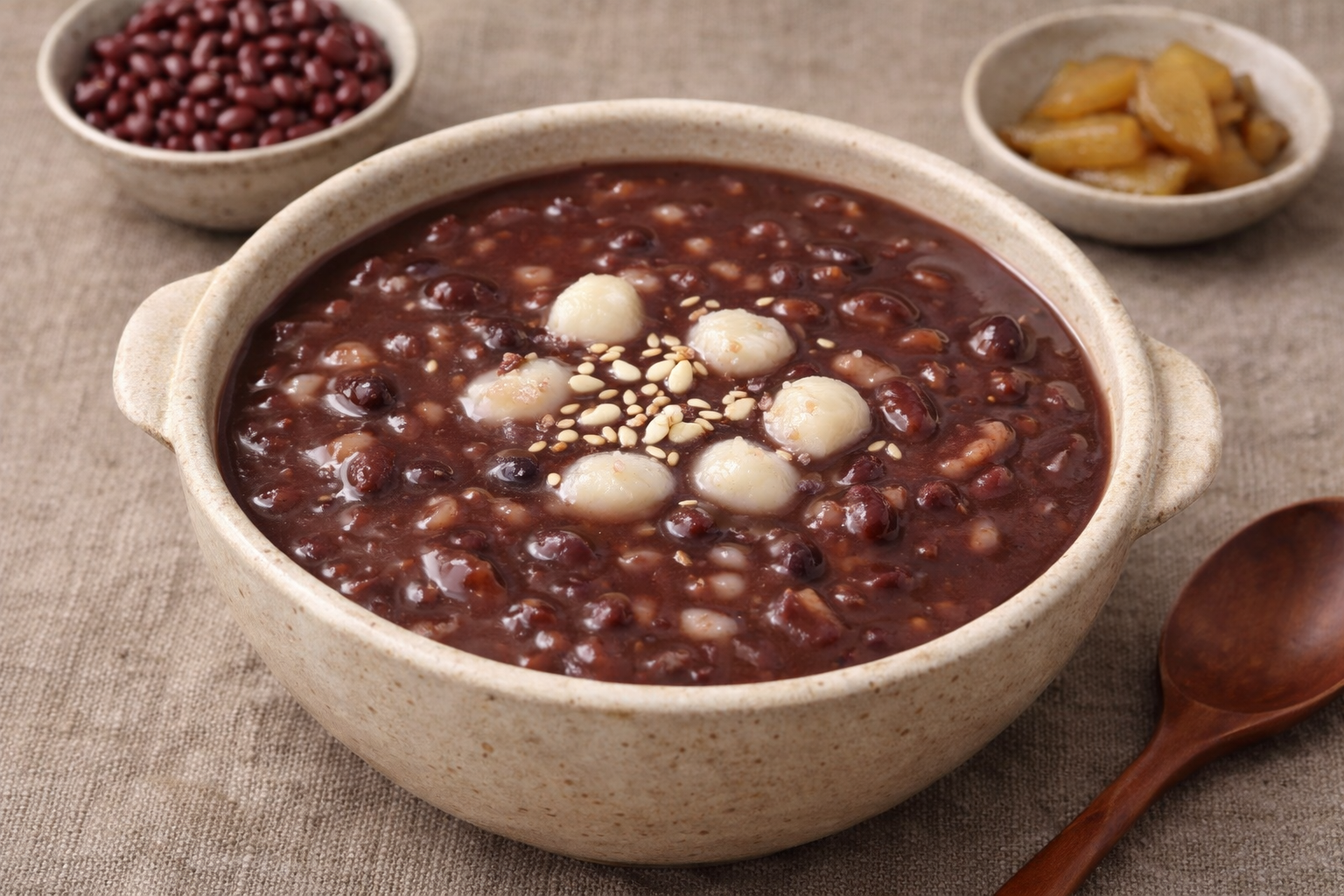
Patjuk is a traditional Korean porridge made by slowly simmering red beans into a thick, hearty consistency. While its texture and flavor vary by region and personal preference, patjuk is generally divided into two main types.
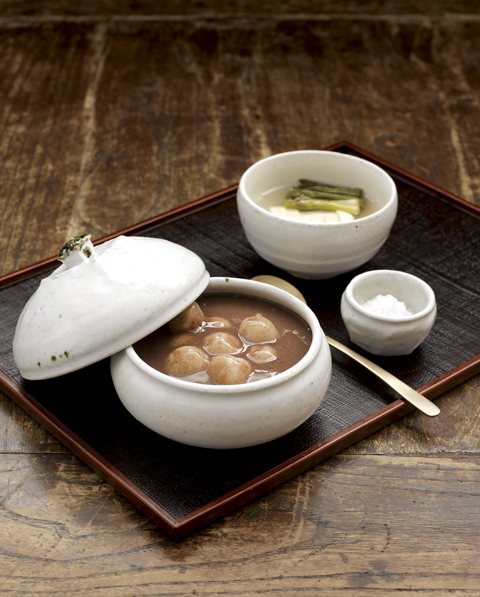
The first type includes saealsim patjuk, which contains small dumplings made from glutinous rice flour, or versions where rice is cooked together with the red bean base. Saealsim, meaning “bird eggs,” refers to the dumplings’ small, round shape. They are associated with the custom of dongji cheomchi, in which people eat as many dumplings as their age to symbolically gain a year of life. Their chewy yet soft texture adds an important layer of enjoyment to the porridge.
The second type is rice patjuk, made by straining the red beans into a smooth liquid and cooking soaked rice directly in the red bean broth. The rice grains blend gently with the bean base, creating a filling and comforting meal.
No matter the style, the deep, earthy flavor of well-cooked red beans and the smooth mouthfeel of patjuk offer profound comfort on cold winter days. Traditionally seasoned with salt to highlight its savory, nutty notes, patjuk can also be sweetened with sugar according to taste. With its warm red hue and rich aroma, patjuk is more than a simple porridge—it is a dish that embodies Korean history, seasonal rituals, and emotional warmth.
Patjuk, Korean red bean porridge, is enjoyed in two main styles. Saealsim patjuk is made by adding saealsim—small, round dumplings shaped like tiny bird eggs—crafted from glutinous rice flour or sometimes millet flour. The dumplings give the porridge a pleasantly chewy texture. Traditionally eaten on the winter solstice, there is a custom of eating as many saealsim as one’s age, which is why it is also called “age dumpling porridge.” This version is usually prepared by finely grinding peeled red beans, straining them to make a smooth red bean liquid, and then boiling the saealsim in it.
Rice patjuk, on the other hand, is made by boiling red beans, mashing them, and cooking them together with soaked rice. The rice grains blend into the red bean base, creating a heartier, more filling porridge with a slightly coarser texture that highlights the natural character of the beans.
In general, saealsim patjuk feels lighter and smoother, while rice patjuk is thicker and more substantial. Both styles showcase the nutritional benefits of red beans, allowing each person to choose according to personal preference.
Patjuk is delicious on its own, but pairing it with a few side dishes creates a richer and more balanced dining experience.
When eating patjuk, people often season it to their taste with either salt or sugar, which helps complement its naturally mild or slightly bitter notes. Even on its own, well-seasoned patjuk is satisfying, but side dishes that add textural contrast pair especially well.
The most classic companion is well-fermented kimchi. Crisp napa cabbage kimchi or refreshing dongchimi (radish water kimchi) provide a bright, clean contrast to the earthy richness of patjuk, stimulating the appetite. The gentle saltiness and fermented acidity of kimchi balance beautifully with both sweetened patjuk (when sugar is added) and savory patjuk (when seasoned with salt).
Pickled side dishes such as radish jangajji or perilla leaf jangajji are also excellent options. Their savory depth adds umami and introduces a pleasant chew. In some regions, people even enjoy patjuk with fried dumplings or jeon (savory pancakes), where the crispy, rich flavors contrast with the soft, comforting texture of the porridge, creating an unexpected but delightful combination.
These accompaniments transform patjuk into a more diverse and satisfying meal, while also serving as a medium for sharing warmth and connection with others. Dongji patjuk is not merely about nourishment—it is a cultural meal that strengthens bonds among those who gather around the table.
Today, Dongji patjuk (red bean porridge) is being reappraised not only as a seasonal tradition, but also as a nutritious and health-promoting food.
Red beans have long been valued for their diuretic properties and their ability to reduce swelling. Rich in dietary fiber, they support digestive health and promote satiety, making them beneficial even for those mindful of their diet. In addition, red beans contain protein, B vitamins, and essential minerals, helping to restore energy during the cold winter months.
In modern life, preparing patjuk in the traditional way can feel time-consuming, but ready-made red bean porridge and packaged red bean paste now make it much easier to enjoy this seasonal dish. At the same time, red-bean-based desserts and drinks—such as red bean lattes, shaved ice, and pastries—have gained popularity, spreading the appeal of red beans to younger generations.
These changes highlight the versatility of red beans and show how traditional foods can evolve and be carried forward in ways that suit contemporary lifestyles. Dongji patjuk is no longer a relic of the past, but a living cultural heritage and wholesome comfort food that continues to enrich our tables today and into the future.
As we reflect on the wisdom and hopes contained in a single bowl of red bean porridge, we wish for health and happiness to fill the coming year.