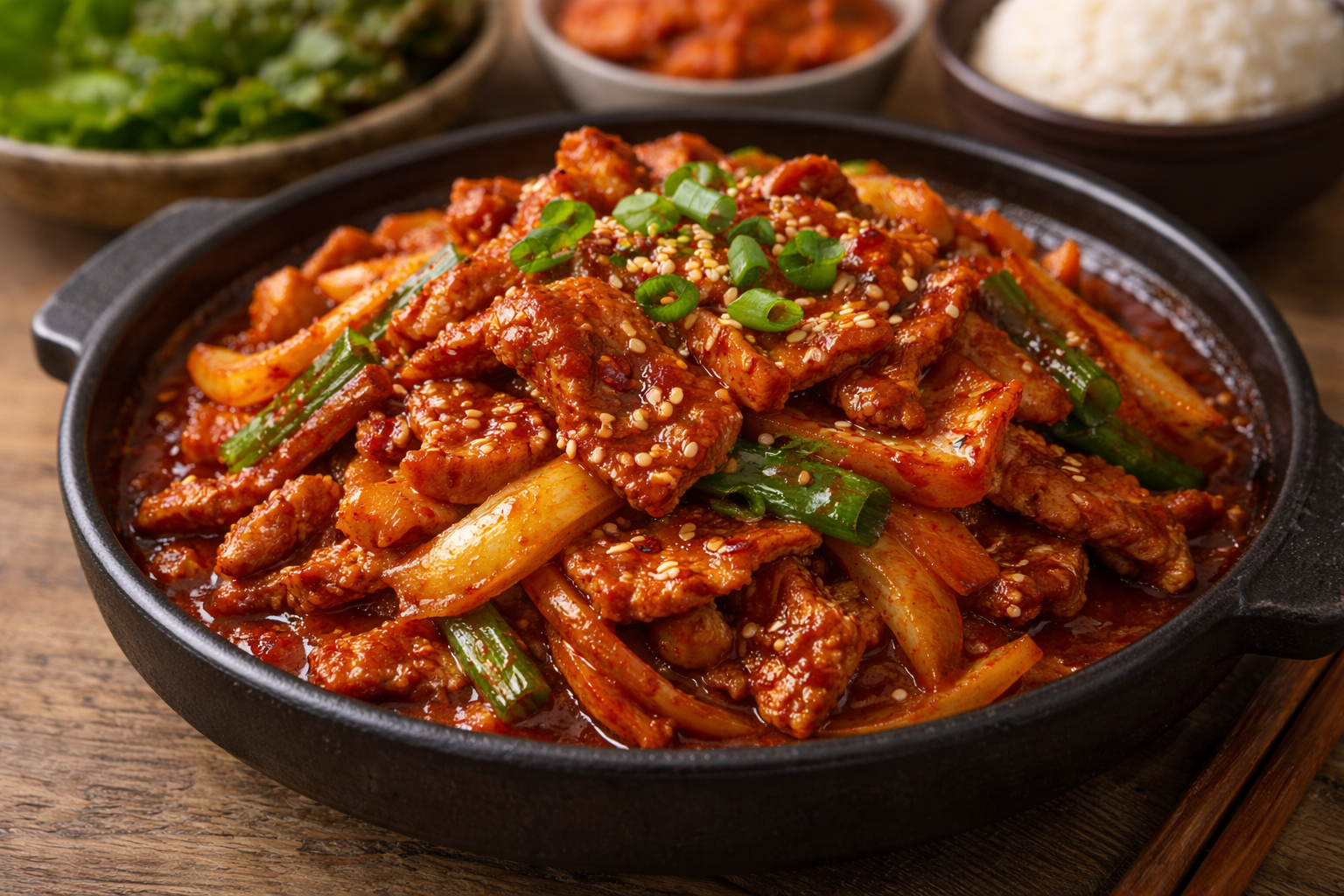
Jeyuk-bokkeum is a quintessential Korean pork dish that never fails to appear on the Korean table. Loved by people of all ages for its irresistible balance of spicy and sweet flavors, it is often nicknamed a “men’s soul food” and is a staple in households that cook Korean cuisine.
The dish’s signature red sauce, made with gochujang and gochugaru, creates a bold visual impact, while the smoky heat and deep umami that fill the mouth capture the very essence of Korean food. Jeyuk-bokkeum appears effortlessly across everyday life—as a comforting home-cooked meal, a popular lunch choice for office workers, or a satisfying dish to enjoy with drinks in the evening.
Exploring the appeal of jeyuk-bokkeum offers an important window into understanding Korean food culture and the rhythms of Korean daily life.
Jeyuk-bokkeum is a Korean stir-fried pork dish made by thinly slicing pork shoulder or pork neck and marinating it in a bold sauce of gochujang (Korean red chili paste), chili flakes, soy sauce, garlic, ginger, sugar, and sesame oil. The marinated pork is then quickly stir-fried over high heat, a process that gives the dish its signature smoky “wok hei” flavor.
The tenderness of the pork and the richly layered marinade come together to create deep, satisfying flavors, with the charred smokiness from high-heat cooking at the heart of the dish’s appeal. Historically, pork was considered a relatively precious ingredient in Korea. However, with industrialization and the widespread adoption of pig farming, it gradually became a staple of everyday meals. Combined with Koreans’ strong preference for spicy food, Jeyuk-bokkeum—featuring a sweet-and-spicy gochujang-based sauce that amplifies the natural richness of pork—quickly earned nationwide popularity.
Beyond its spiciness, the dish achieves a harmonious balance of sweetness, saltiness, and umami, making it an ideal accompaniment to rice. Each household and restaurant adds its own signature touch, resulting in countless variations that reflect personal taste and culinary tradition.
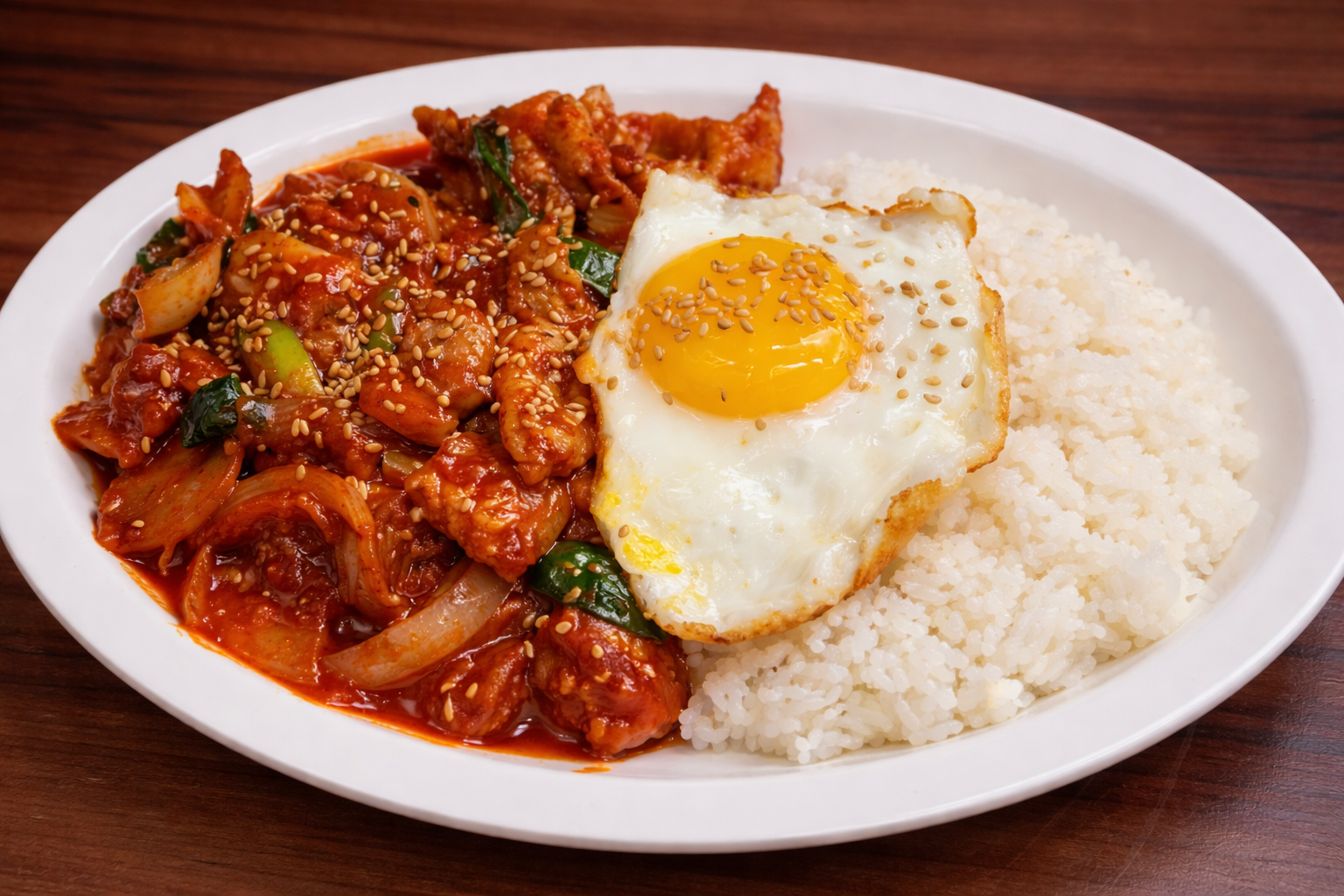
While Jeyuk Bokkeum is widely enjoyed on its own, its popularity has grown even further through variations such as Jeyuk Deopbap and Jeyuk Bibimbap.
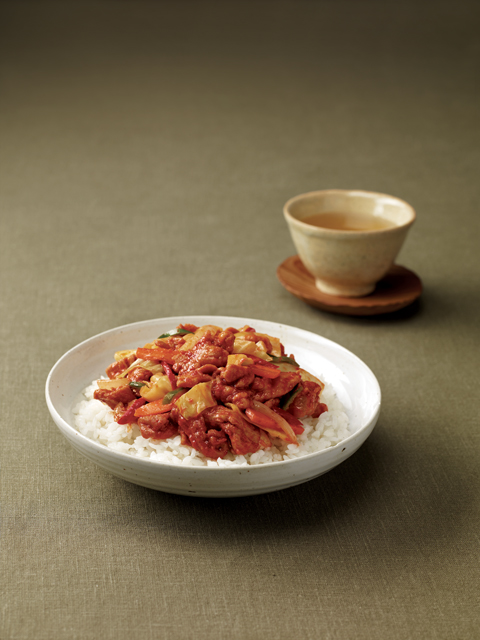
Jeyuk Deopbap is served by generously placing stir-fried spicy pork over a bowl of steamed rice, making it a satisfying and well-balanced one-dish meal.
In Korea, this dish is commonly found in office districts, university neighborhoods, and academy areas, where people look for quick, affordable, and filling meals. From company cafeterias to casual local restaurants, it has become a reliable everyday choice.
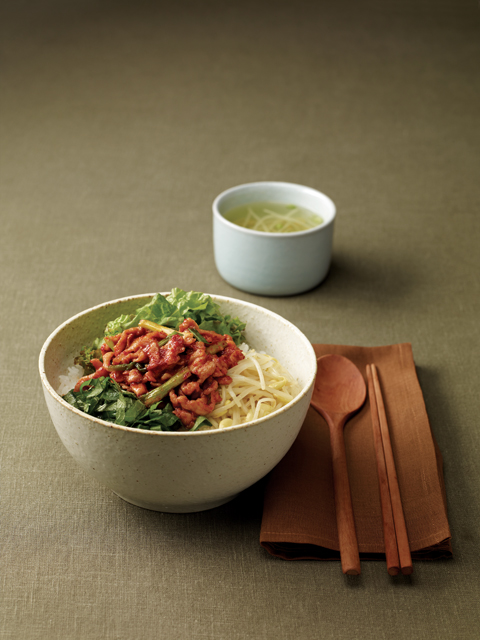
Jeyuk Bibimbap, on the other hand, combines rice, Jeyuk Bokkeum, fresh vegetables such as lettuce and bean sprouts, and often a fried egg, all mixed together before eating. The variety of textures and flavors, along with the interactive act of mixing, adds to its appeal.
These variations preserve the bold, spicy-sweet essence of Jeyuk Bokkeum while showcasing how seamlessly it fits into Korea’s everyday dining culture, where rice-based one-bowl meals are both practical and deeply ingrained.
Jeyuk Bokkeum is delicious on its own, but a few simple tips can elevate the experience even further.
First, try enjoying it wrapped in fresh leafy vegetables such as lettuce or perilla leaves. The crisp greens help balance the spicy flavors while adding freshness and texture. Topping the wrap with garlic, sliced chili peppers, or ssamjang (Korean dipping paste) creates even deeper layers of flavor.
Second, if you have leftovers, turn them into spicy pork fried rice. Stir-frying the pork with rice, kimchi, and roasted seaweed flakes transforms it into a satisfying new dish.
Third, when cooking, adding plenty of onions or green onions enhances the dish with natural sweetness, rounding out the bold, spicy sauce.
Finally, don’t hesitate to customize it to your taste—melt cheese over the pork for a creamy contrast, or mix it with boiled noodles for a hearty, comforting variation. Jeyuk Bokkeum is a dish that welcomes personal creativity, making it even more enjoyable every time you eat it.
In this way, jeyuk bokkeum has come to represent far more than a simple pork dish—it stands as an important expression of Korean food culture and emotional sensibilities. The combination of stir-fried pork and its sweet-and-spicy sauce creates a satisfying meal when paired with rice, while variations such as jeyuk rice bowls or jeyuk bibimbap continue to offer new flavor experiences in everyday life. This flexibility and mass appeal are the key reasons why jeyuk bokkeum has remained a long-standing staple on Korean dining tables.
That said, there are clear limitations to promoting jeyuk bokkeum as a universally representative K-food, as pork is avoided in many countries and regions for religious or cultural reasons. Nevertheless, jeyuk bokkeum holds strong symbolic value as one of the dishes that most honestly reflects everyday Korean eating habits—the space between home cooking and dining out, as well as the Korean preference for bold, spicy flavors.
Loved across generations and changing times, jeyuk bokkeum will continue to play an essential role in Korean cuisine. Even if it cannot appear on every table around the world, the way of life and culinary wisdom contained in a single plate of jeyuk bokkeum will remain an indispensable story for understanding K-food. We invite you to savor not only its deep flavors, but also the cultural journey it represents.