As mid-June passes, the arrival of summer can be felt in every part of daily life. The intense sunshine, the humid air, and the sweat that forms after just a few steps all signal the season’s return. And when summer arrives in Korea, one dish immediately comes to mind: a bowl of naengmyeon.
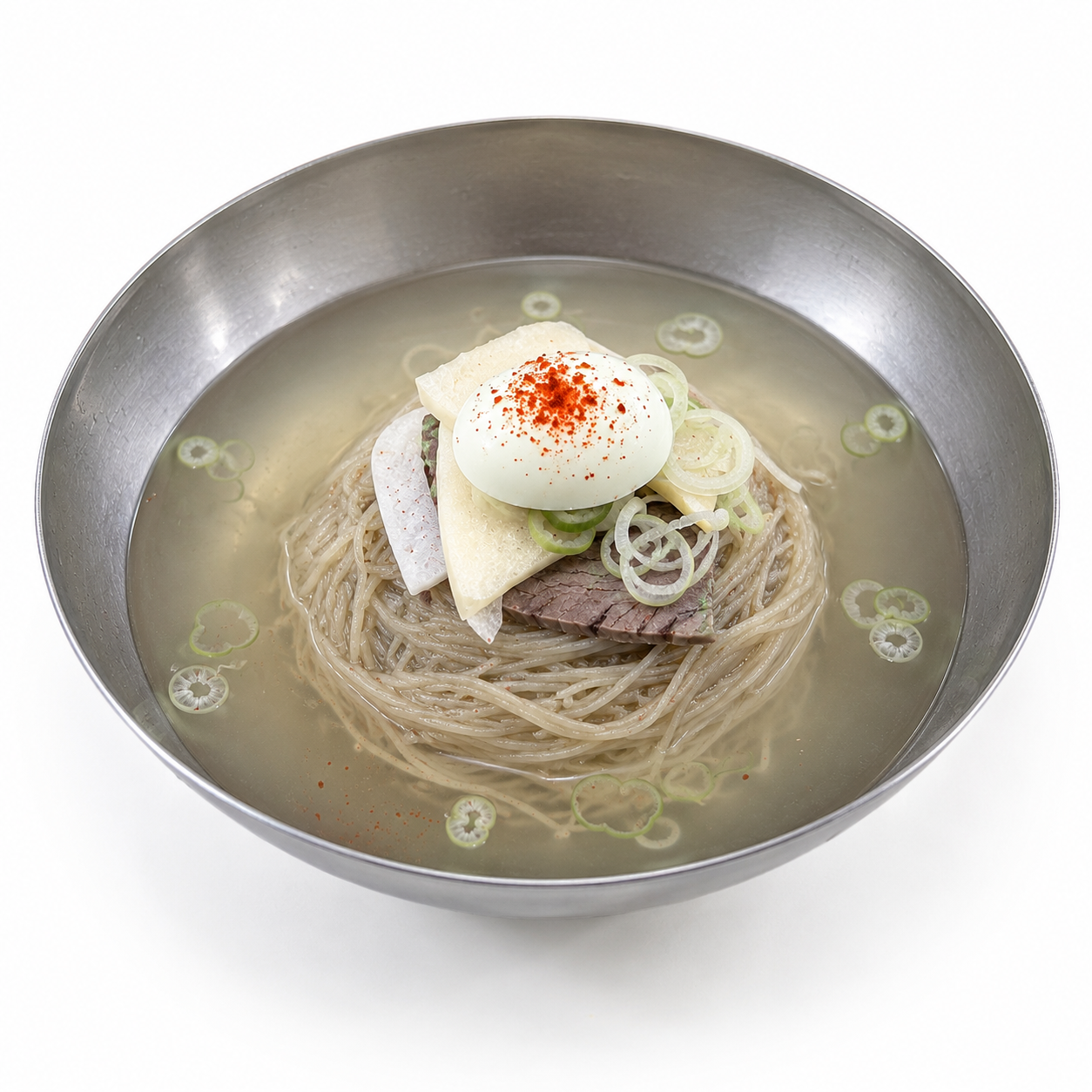
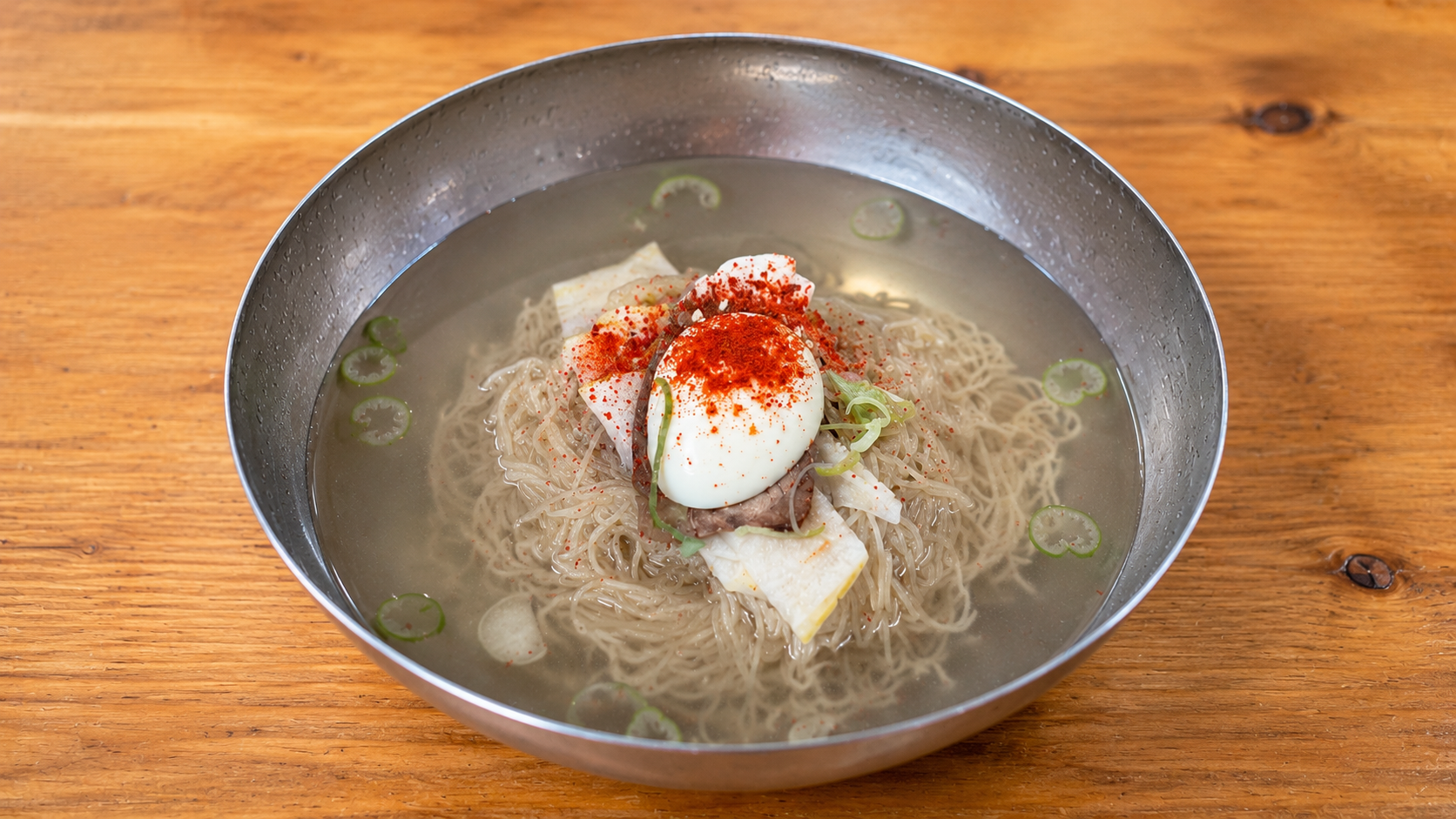
For many first-time visitors to Korea, naengmyeon may seem like a tangy or spicy noodle dish enjoyed during the hot months. In reality, however, there are many different varieties. Among them, Pyeongyang Naengmyeon stands apart. Rather than relying on bold seasonings, it highlights the delicate aroma of buckwheat noodles and the clean, subtle flavors of its broth.
At first taste, it may seem surprisingly mild. Yet with each sip of broth and each bite of noodles, its quiet charm gradually reveals itself. Instead of strong spices or intense flavors, the dish invites diners to appreciate the nutty fragrance of buckwheat and the gentle depth of the broth.
Because of this, many first-time diners describe it as “bland.” But as they become familiar with it, they often discover a deeper appreciation for its understated character. Among devoted fans of Pyeongyang Naengmyeon, there is a common saying: once you acquire the taste, it is a dish that never stops calling you back.
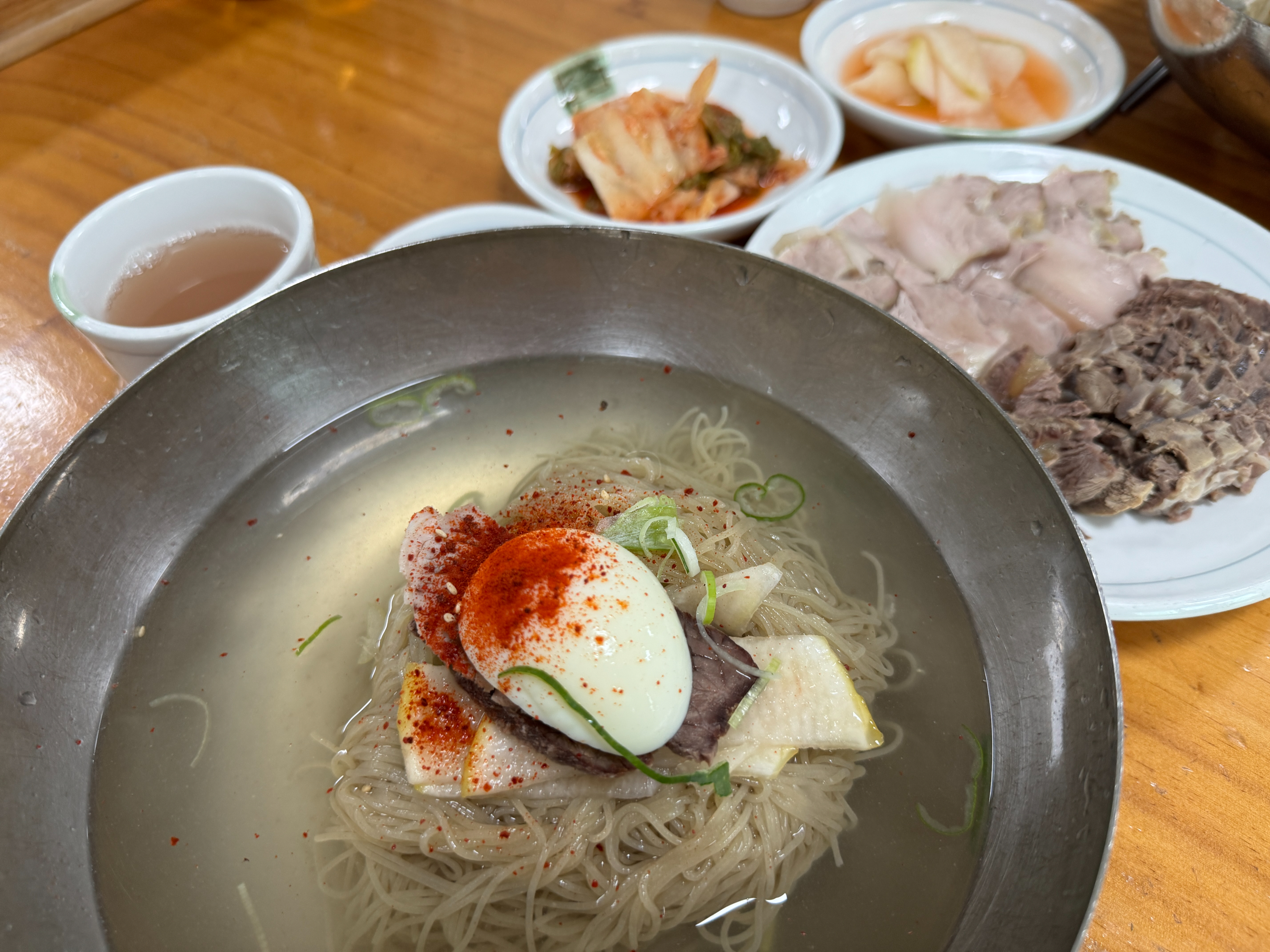
Today, we visit Uijeongbu Pyeongyang Myeonok, one of the most respected names in the lineage of Pyeongyang Naengmyeon.
There is a phrase that often comes up when people talk about Pyeongyang Naengmyeon: “It tastes too plain.” Many first-time diners find themselves wondering, “Why is such a mild dish so famous?”
I felt the same way. Early in my career, I visited a well-known Pyeongyang Naengmyeon restaurant near my office and remember thinking, “This just isn’t for me.” Even after seeing the dish praised on television and in countless media features, I struggled to understand its appeal. Curious about what I was missing, I continued visiting different restaurants, but the answer remained elusive.
That changed one day when I happened to visit Uijeongbu Pyeongyang Myeonok during a business trip to Uijeongbu. A single bowl of naengmyeon completely transformed my perception of the dish.
It was there that I learned an important lesson: not all Pyeongyang Naengmyeon tastes the same.
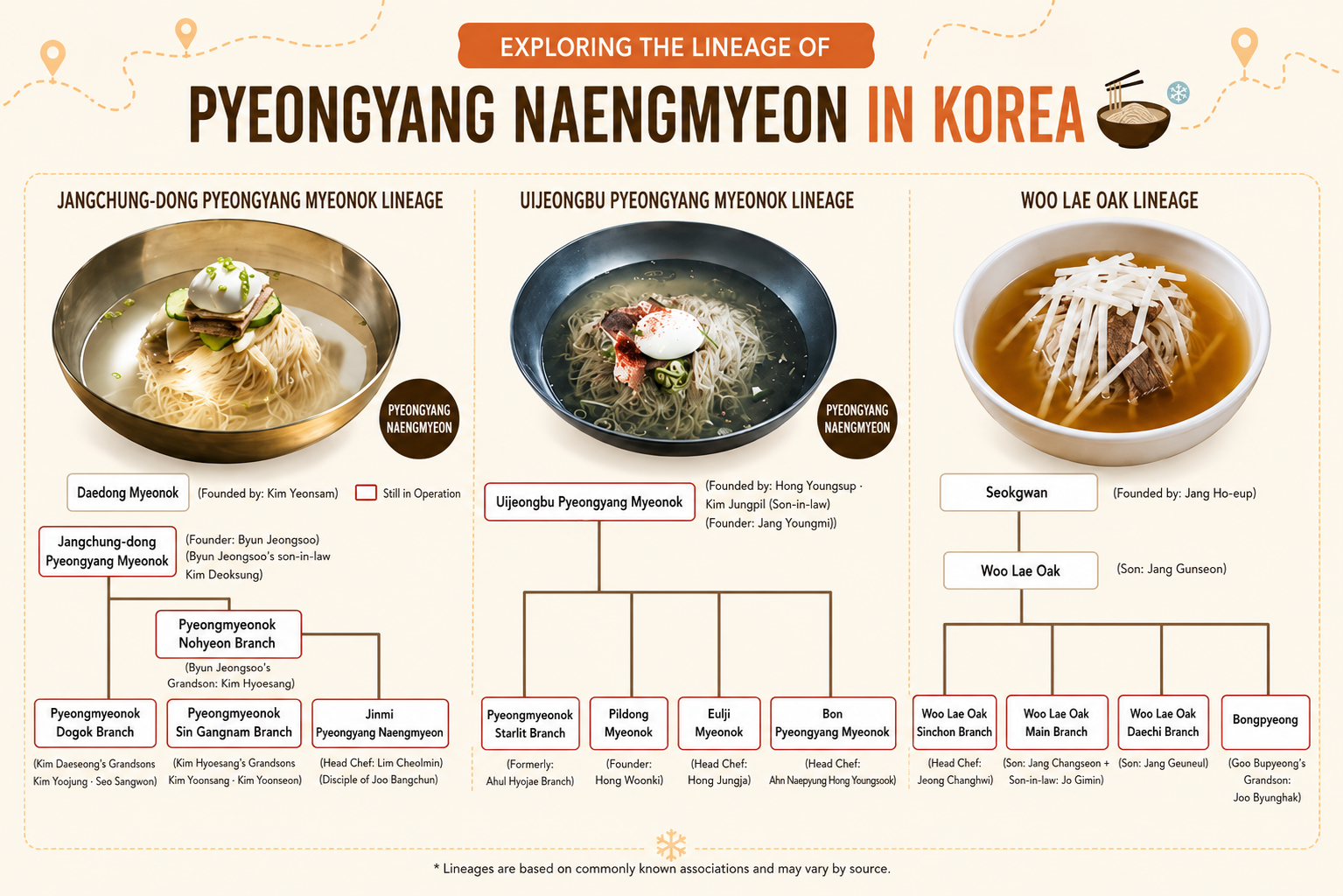
Today, Pyeongyang Naengmyeon is often discussed in terms of three major lineages: the Jangchung-dong Pyeongyang Myeonok style, the Uijeongbu Pyeongyang Myeonok style, and the Woo Lae Oak style. While not every restaurant fits neatly into one of these categories, the distinction helps explain the diversity within the tradition.
Though they all share the name Pyeongyang Naengmyeon, each style differs in the character of its broth, the proportion of buckwheat used in the noodles, the texture of the noodles, and even the choice of toppings. As a result, enthusiasts often develop strong preferences for one lineage over another.
Much like wine lovers comparing grape varieties and regions, Pyeongyang Naengmyeon fans enjoy discussing the unique characteristics of each style while discovering their own personal favorite. And for me, the place where I first came to appreciate the true charm of Pyeongyang Naengmyeon was Uijeongbu Pyeongyang Myeonok.
For many first-time diners, one question naturally comes to mind: how can Pyeongyang Naengmyeon be enjoyed at its best?
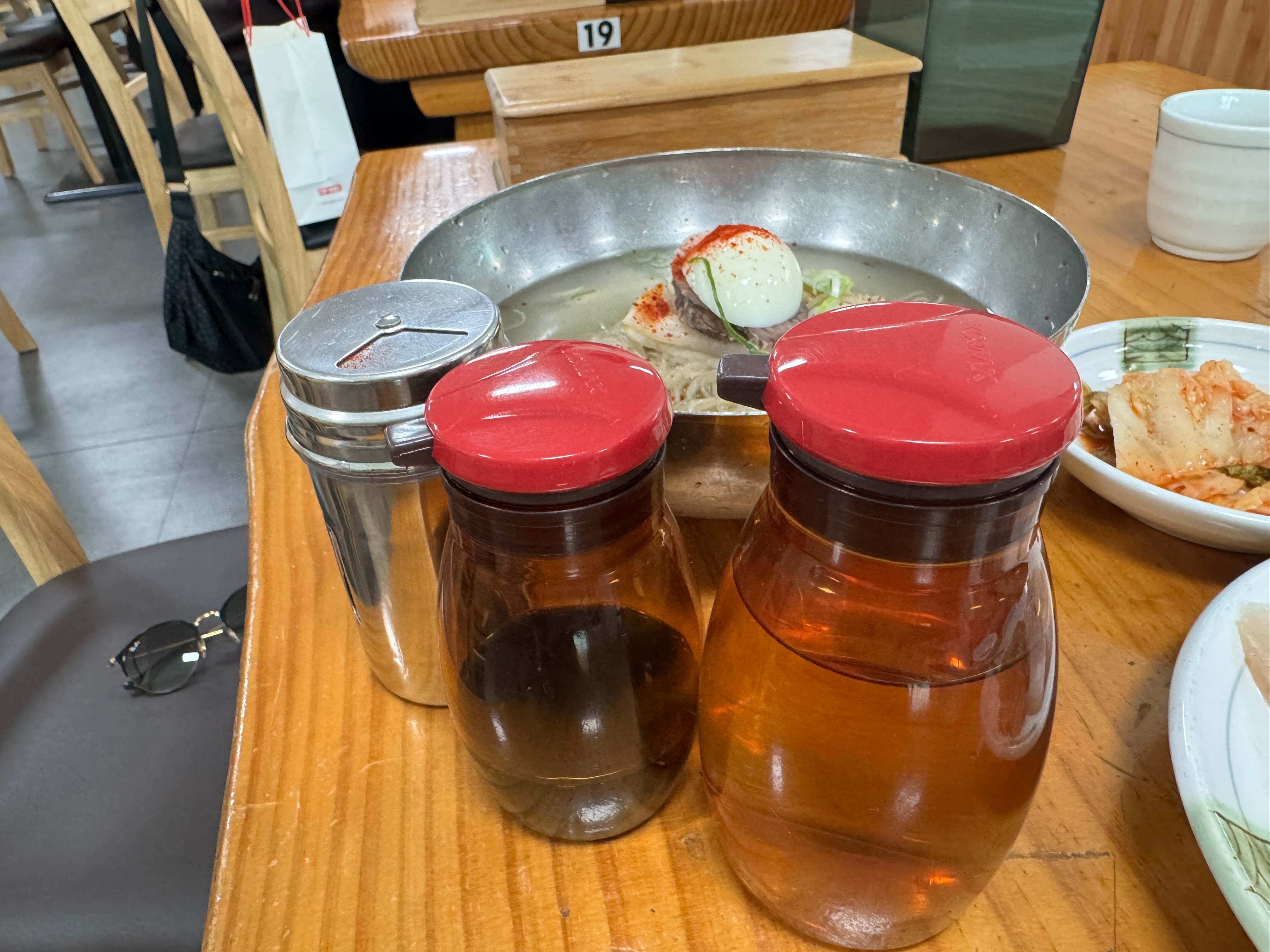
When naengmyeon is served at Korean barbecue restaurants, it is almost always accompanied by vinegar and mustard. Pyeongyang Naengmyeon also comes with optional condiments, although the selection varies by restaurant. Some offer chili powder or soy sauce, while others provide the familiar combination of vinegar and mustard.
One of the most common tips for enjoying Pyeongyang Naengmyeon is to avoid adding any condiments at the beginning. Instead, start by tasting the broth on its own. Because the dish is prized for the delicate balance between its clean broth and the aroma of buckwheat noodles, experiencing those flavors first allows you to appreciate its character more fully.
Only then should you experiment with different condiments and discover how the flavor changes. Comparing the original taste with the adjusted version is part of the experience for many enthusiasts.
At Uijeongbu Pyeongyang Myeonok, diners can add vinegar, chili powder, or soy sauce according to their preferences. I personally tried a small amount of soy sauce and was surprised by the result. The broth briefly reminded me of Japanese soba, while still retaining the distinctive character of Pyeongyang Naengmyeon. It offered a completely different flavor profile and became one of the most memorable discoveries of the visit.
Another way to appreciate Pyeongyang Naengmyeon is through the dishes served alongside it. The overall experience can feel quite different depending on what you choose to pair with your noodles.
Some restaurants are known for serving mandu (Korean dumplings), while others are famous for their suyuk, slices of gently boiled meat. At restaurants such as Woo Lae Oak, enjoying Pyeongyang Naengmyeon alongside bulgogi is a well-established tradition. The combination of cold noodles and warm meat dishes has been part of Pyeongyang Naengmyeon culture for generations.
At Uijeongbu Pyeongyang Myeonok, both pork and beef suyuk are available. The mild flavor of the meat paired surprisingly well with the clean and refreshing taste of the noodles. What impressed me most was how each complemented the other. A bite of meat followed by a sip of the chilled broth and a mouthful of noodles seemed to bring out the best in both.
Pyeongyang Naengmyeon may feel unfamiliar or even underwhelming at first. Yet as you become accustomed to the aroma of buckwheat and the subtle depth of the broth, it often turns into a dish that stays on your mind long after you’ve finished eating.
Perhaps the real appeal of Pyeongyang Naengmyeon is not deciding which restaurant serves the best bowl, but discovering the style that best suits your own palate. If you’re curious about one of Korea’s most distinctive summer foods, Uijeongbu Pyeongyang Myeonok is an excellent place to begin.